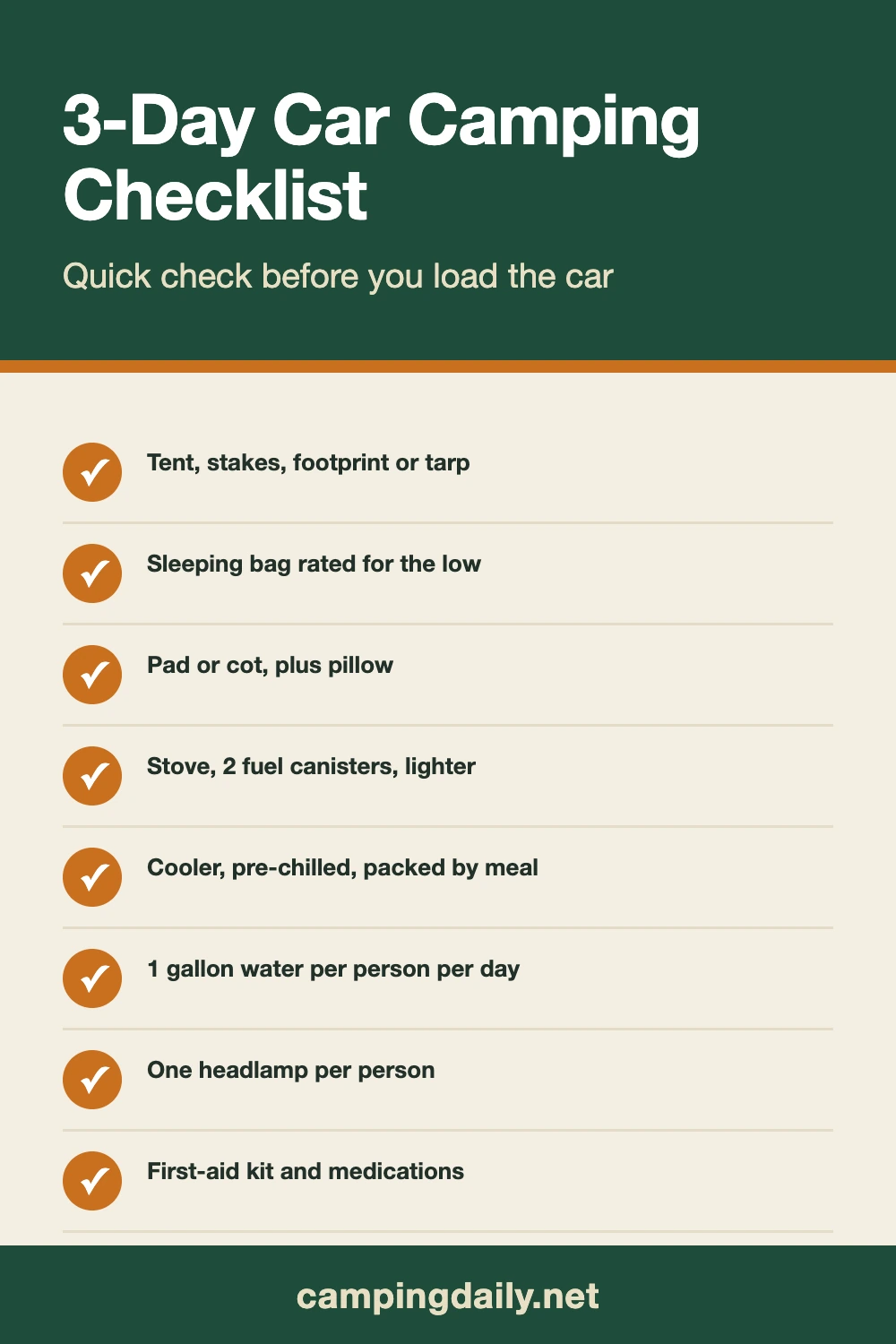
Pack these ten first: tent, sleeping bag rated for the overnight low, sleeping pad, headlamp, stove with fuel, lighter, water, cooler with ice, first-aid kit and tarp. For a 3-day car camping trip, add 1 gallon of water per person per day, two fuel canisters for the stove, and clothes chosen for the night’s low rather than the afternoon high.
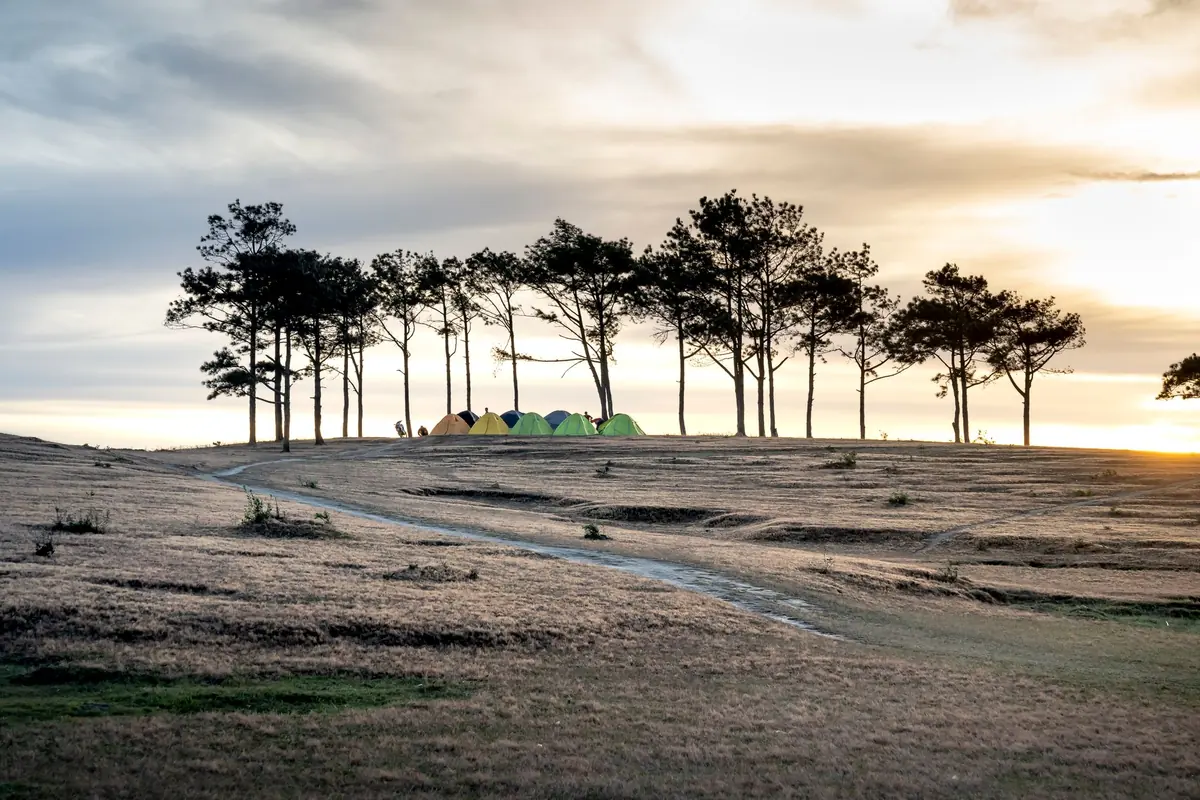
Car camping means you drive to the site and unload, so weight isn’t the limit. Space, and forgetting things, are.
How this list differs from the hiking Ten Essentials
The hiking Ten Essentials cover navigation, sun protection, insulation, light, first aid, fire, repair, food, water and shelter for people who travel far from a car. Some items overlap with the list above. This one assumes your vehicle is a few steps from the tent, which is why it includes a cooler, a stove and a tarp over the picnic table.
Size the trip before you pack
Work out the numbers first, then fill the car.
| Item | Rule of thumb for a 3-day trip | Example: 2 people |
|---|---|---|
| Water | 1 gallon per person per day for drinking, cooking and cleanup | 6 gallons minimum |
| Meals | About 3 meals and 2 snacks per person per day | 18 meals, 12 snacks |
| Stove fuel | 2 canisters for a weekend (check the burn time on yours) | 2 canisters |
| Trash bags | At least 2 per day | 6 bags |
| Tent capacity | Group size times 2 | 4-person tent |
The water figure is a floor. Hot weather, a lot of cooking or a long hike pushes it up.
Check the forecast before loading, looking at both the daytime high and the nighttime low. The low decides your sleeping bag, your warm layer and whether you need a hat for bed. The high decides your water, shade and sun gear.
Shelter and sleep gear
Tent, footprint and tarp
Buy or borrow a tent rated for double your head count. A couple wants a 4-person model, and a family of four wants an 8 or 9 person tent. Rated capacity assumes sleepers lying shoulder to shoulder with nothing else inside, and a storm afternoon with four pads, four packs and a heap of wet shoes shows how fast that runs out.
The small items are the ones that get left behind. Count the stakes before you leave, because they slip out of tent bags and roll under car seats. Bring a mallet or a multi-tool with a hammer, since hard ground bends stakes pushed in by hand. A smooth, fist-sized rock can stand in for a mallet to drive stakes in a pinch.
Cut a footprint so it sits inside the tent’s edges. If it sticks out past the walls, rain runs onto it and pools under the floor. A tarp over the kitchen or picnic table gives you a dry place to cook and sit, and it doubles as a ground cover if the footprint is missing. A small broom and dustpan keep dirt out of the sleeping bags by night two, and extra cordage covers tarps, a clothesline and a failed guy line.
Sleeping bag, pad, cot and pillow
Pick the bag by the overnight low, not the daytime high. A 50°F bag fits summer nights, and a 30°F bag fits spring and fall. Ratings vary by brand and by how cold you sleep, so if the forecast low sits right on the rating, step down a category or add a liner or blanket.
Under the bag you need something between you and the ground. A foam or inflatable pad insulates. A cot lifts you off the ground, leaves air underneath and is easier to climb out of, though a cot alone can still feel cold in cool weather and a pad on top helps. Bring a real pillow if the car has room. A stuffed jacket works, but then you’ve got no jacket for the morning.
Kitchen, stove, fuel, cooler and water
Stove and fuel
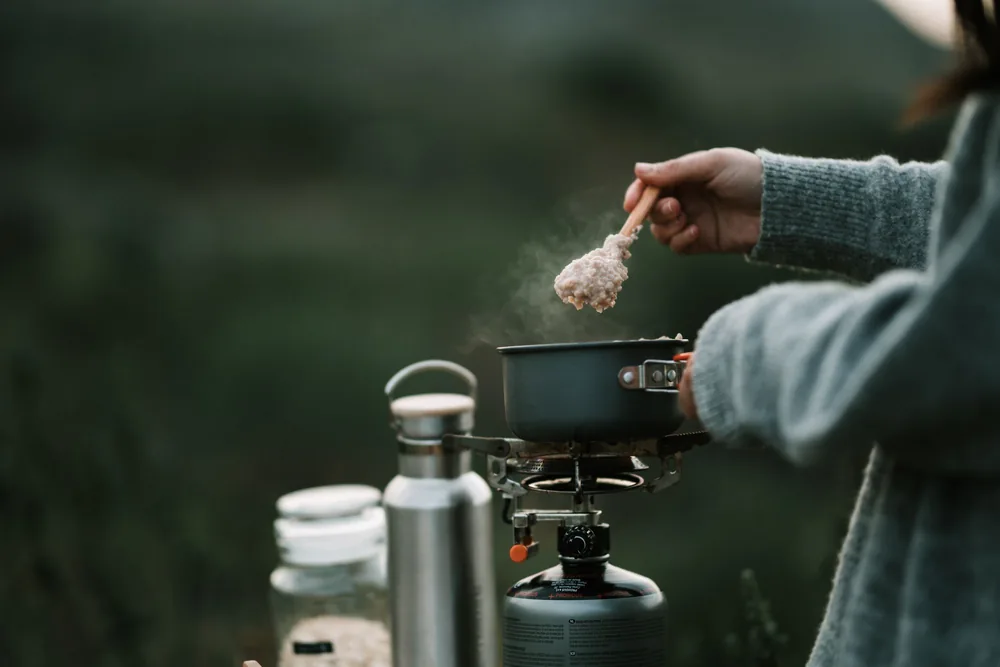
A stove isn’t required, but without one you’re cooking over a fire or eating food that needs no cooking, and fire cooking depends on weather, restrictions and wood. Bring the stove, two fuel canisters for a weekend, and a lighter even if the stove has a built-in igniter, since igniters fail.
Never run a stove, grill, lantern or heater that burns fuel inside a tent, camper or vehicle while people are in it or sleeping. They produce carbon monoxide, which you can’t see or smell, and they can set fabric on fire. Cook outside, with the stove on a stable surface, away from tent walls and out of tall grass. Even in an RV, don’t run a stove, grill or heater that burns fuel in a way it isn’t designed for indoor use. Make sure the RV has a working CO alarm (not every one does) and ventilate as the manufacturer directs. The RV camping hub covers that setup.
Cookware and eating gear
One pot and one pan cover most trips, with a skillet instead of the pan if you cook breakfast. Add a spatula, a big spoon, a sharp knife with a cover, and plates, bowls, cups and utensils for each person. Can and bottle openers, a pot holder, paper towels, dish soap, a sponge and a wash basin round out the kitchen. If you plan to light a fire, bring some newspaper along with the lighter.
For menus, shopping amounts and one-pot ideas, see the camping recipes and meals hub.
Cooler and food
Chill the cooler before it goes in the car. Put in a bag of ice or frozen jugs the night before, along with the frozen food you plan to eat on day three. Then pack by meal rather than by food type: dinner one in one bag, breakfast two in another. Every opening lets cold air out, so fewer digs means longer-lasting ice.
Count nine meals per person for a 3-day trip, plus snacks and drinks. USDA guidance is to keep perishable food at 40°F or below and to throw out perishables that have sat above 40°F for more than 2 hours, or more than 1 hour when the air is above 90°F. A cooler full of warm water is past that point.
Water
One gallon per person per day covers drinking, cooking and cleanup, so two people over three days need six gallons. If the campground has a potable tap you can bring less and refill, but carry enough for the first night anyway. Taps get shut off or turn out to be far from the site.
Firewood and food storage
Look up the campground’s firewood rules before bringing any. Some parks sell wood on site and restrict outside wood, partly because moving firewood can spread tree pests between regions. Buy local or certified heat-treated wood.
Follow the campground’s food-storage rules. In bear country, use the provided bear boxes or an approved bear-resistant container. Elsewhere, store food and scented items in a locked hard-sided vehicle, never in the tent. Raccoons, squirrels and birds open trash bags, so bring extra bags and pack trash out on schedule.
Clothing and layers
The usual mistake is packing for the daytime high. In some regions a night that starts at 75°F at arrival can drop near 40°F before dawn.
For one person on a 3-day trip:
| Item | Count |
|---|---|
| Footwear | Hiking boots or shoes, plus camp sandals or slip-ons |
| Socks | 3 pairs |
| Underwear | 3 to 4 |
| Rain jacket | 1 |
| Warm layer (fleece or insulated jacket) | 1 |
| Shorts or hiking pants | 2 |
| Quick-dry shirts | 3 |
The rain jacket goes in even when the forecast is clear. Local showers slip past forecasts, and the same shell cuts the wind on a cold morning.
Skip cotton where you can. A damp cotton hoodie stays damp, and cold plus damp turns a mild night into a bad one. Wear a quick-dry base layer with an insulated layer over it. Towels follow the same logic: a quick-dry towel is dry by morning, while a cotton bath towel can stay wet for days in a cool, humid tent.
Five pairs of shoes per person is probably too many, and two pairs cover most 3-day trips. Add a hat (a warm one if the low is below about 50°F) and dry sleepwear that you wear only in the tent. If the trip is built around wet places, such as the waterfalls of Michigan’s Upper Peninsula, bring wet-weather footwear and a spare pair of dry socks.
Light and power
Pack one headlamp for each person, not one for the family. Two people hunting for the bathroom in the dark with a single light means one of them is stumbling. Pick a model with a red light mode: red light is gentler on other campers’ night vision and is commonly recommended around wildlife.
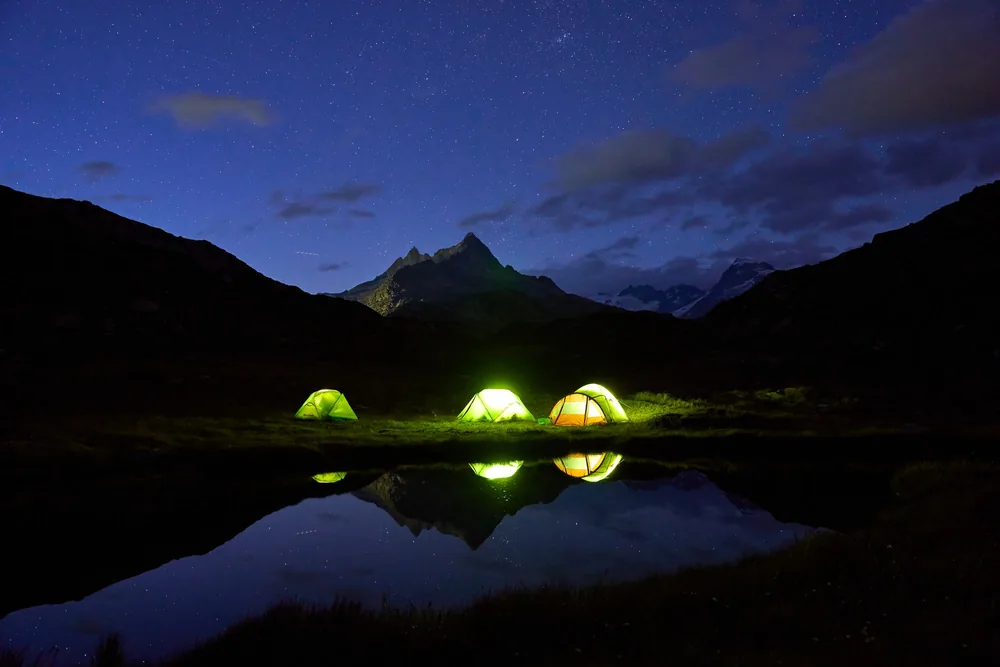
Add one lantern for the picnic table so the group has ambient light without everyone aiming a headlamp at the food. Bring spare batteries, or charging cables for rechargeable units.
A power bank is worth packing, especially if you rely on your phone for maps or emergencies. Keep the phone’s battery charged and use airplane mode in weak-signal areas. Save or print the directions to the campground before leaving, since service can drop on the last stretch of the drive.
Hygiene, first aid and cleanup
Toilet paper, soap and trash
Campground bathrooms can run out of toilet paper or soap, so bring a roll, biodegradable soap and hand sanitizer. Pack the extra trash bags from the table above, plus a separate bag for dirty laundry.
A common camping golden rule is to leave the site better than you found it. Walk the site on the last morning and check under the table and around the fire ring for small pieces.
Leave No Trace puts dishwashing and buried human waste at least 200 feet (about 70 adult steps) from water and trails. Where the campground has toilets, use them.
First-aid kit and medications
A store-bought kit is a start. Open it and check what’s inside, then add what you’ll really use: bandages in several sizes, gauze and tape, antiseptic wipes, antibiotic ointment, blister care, tweezers, pain reliever and an antihistamine. Prescription medication goes in a labeled container with a spare dose, and anything specific to your group, such as an inhaler or an allergy auto-injector, belongs in the kit too.
Check expiration dates. A kit bought three years ago may have dried-out wipes and empty tubes.
Bug and sun protection
Pack repellent even for a cool trip. Mosquitoes can show up unexpectedly, especially near water.
Skin repellent is applied according to its label. Permethrin is a separate product: a pesticide made for clothing and gear, never for skin. Treat items outdoors, follow the label exactly, let them dry fully before wearing them, and keep it away from cats and from water sources. An area repellent device near the table is a third layer; use it outdoors and follow the product instructions.
For the sun, the Minnesota DNR recommends sunscreen at SPF 30 or higher. Add a hat, sunglasses and a lip balm with SPF. A tarp or pop-up shade over the table gives the group somewhere to go at midday.
Camp comfort
Bring one chair per person; the folding kind that fits in a trunk is fine. If the campsite has a picnic table you may not need another, but a small folding table gives the stove its own surface and keeps cooking off the dining table.
A small mat outside the tent door keeps mud out of the sleeping area. A clothesline, a picnic blanket and a deck of cards fill the rest of the space you have left.
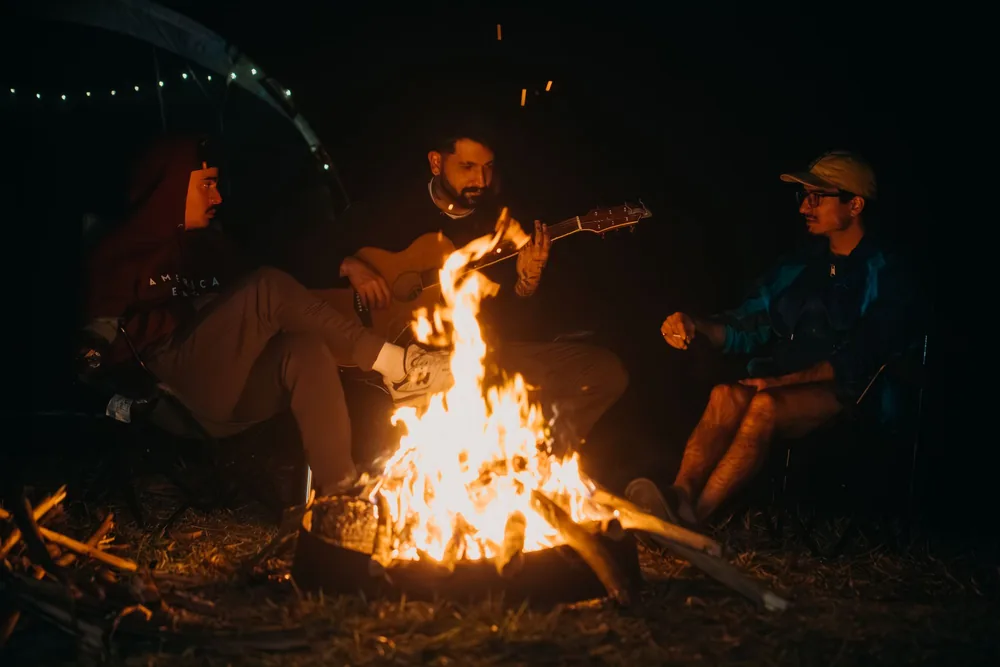
Packing for car camping, backpacking and RVs
The list above is a car camping list. Other trip types change it:
- Car camping. Space is the limit. Group gear into labeled bins (kitchen, bedding, clothes) so you can find the stove without unloading everything.
- Backpacking. Weight is the limit. A freestanding tent under 4 pounds is a common target, and the list shrinks to the core gear plus food, water treatment, navigation, extra insulation and a repair kit. Leave the chairs, the large cooler and the second pair of shoes at home.
- RV. You carry less bedding and cookware but need hookup items and a plan for waste.
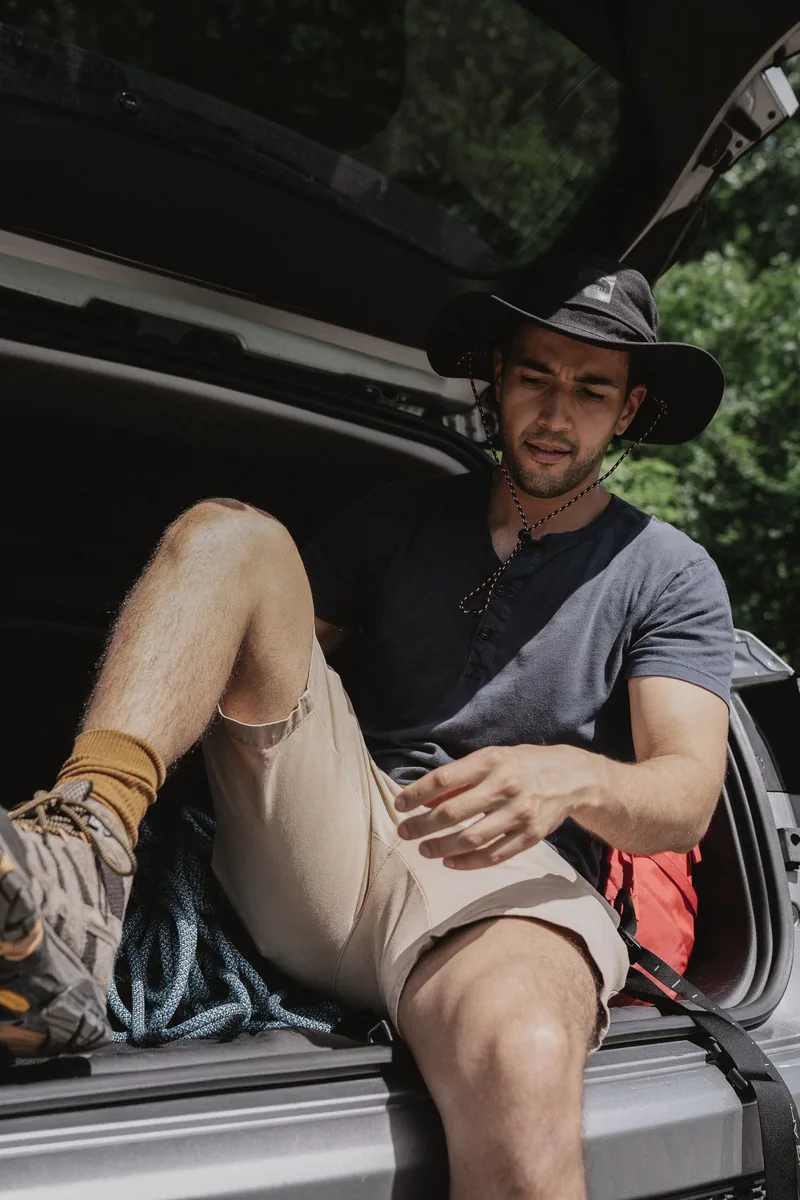
Load the car in reverse order of use. Pack the items you’ll need last (extra bedding) at the bottom, and keep the tent, tarp, rain jacket and cooler where you can reach them first.
Camping with kids
Each child gets a headlamp or small flashlight, which gives them something to do in the dark and keeps them out of guy lines. Pack a spare outfit for each day, because kids get wet and muddy faster than adults, plus a hat and warm socks for sleep, since small bodies cool faster. A favorite stuffed animal or blanket matters more than a new gadget. Each child also needs a water bottle and snacks of their own, because meals won’t follow their schedule. Apply sunscreen and bug repellent according to the label for children, and bring a kid-size camp chair so they have a seat of their own at a safe distance from the fire.
Before you light anything, set one rule: kids stay out of the fire ring area unless an adult is beside them, and you show them where the line is. Never leave a fire unattended, and put it fully out with water before leaving or sleeping.
Weather
The forecast check covers wind, rain and storms as well as temperature. In strong wind, stake out every guy line and follow the tent maker’s instructions for orienting it. If thunderstorms are forecast, a tent doesn’t protect you from lightning. A hard-topped vehicle or a substantial building is safer than a tent. Keep off high ground and away from isolated tall trees, and follow campground and ranger guidance. On a site near a river or in a dry wash, flooding is a risk, so move to higher ground if heavy rain is forecast upstream.
Fire restrictions and wood rules vary by campground, agency and season, so check the current rules for your site before you buy wood or plan a fire meal. A national park trip adds its own planning, as in the Acadia camping guide.
What people forget
Tent stakes and the mallet to drive them top the list, followed by extra toilet paper, soap and trash bags. A second lighter matters when the first one dies. Can openers, medications, directions to the campground and spare headlamp batteries also get left on the kitchen counter.
If you forget something, ask the camp host or a neighboring site before driving to a store. A nearby town may have what you need, and some items have a substitute: a trash bag over a pack works as rain cover. Stakes and sleeping bags are harder to replace, so check those at home.
What starting out costs
Costs add up fast when you buy everything new. Sleep gear is the biggest block: a starter tent lands between $80 and $150, and each sleeping bag ($60 to $120) needs a pad ($40 to $80) under it. Cooking and cooling come next, with a stove and a cooler each in the $30 to $80 range. Small items finish the list: about $20 per headlamp and $40 to $60 for a basic kitchen kit. Retailer prices move by store and season, so check current listings.
Renting the big items for a first trip is an option. Rental costs vary widely by store and region, so check local rental pages for current prices.
Frequently asked questions
What are the 10 essential items for camping?
Tent, sleeping bag rated for the expected low, sleeping pad or cot, headlamp, stove with fuel, lighter or matches, water, cooler with ice, first-aid kit and tarp. That is a car camping list. For backcountry trips, add a map or navigation tool, extra insulation and a repair kit.
What is the 3-3-3 rule for camping?
It’s a road trip pace some campers follow: drive no more than 300 miles a day, arrive by 3 p.m., and stay at least 3 nights. It isn’t an official standard. Early arrival leaves daylight for setup and cooking. For linking several sites, the road trip planning guide covers routes and driving days.
What are the 7 C's of camping?
The 7 C’s extend the 5 C’s survival framework (cutting tool, combustion, cover, container, cordage) by adding a compass and a candle. The list is not standardized, so treat it as a minimal emergency kit rather than a packing checklist for a campground trip.
What is the golden rule of camping?
Leave the site better than you found it. In practice that means packing out all your trash, picking up small litter other people left, and checking the ground around the fire ring and table before you drive away.
What is the 200-foot rule?
It’s a Leave No Trace distance for anything that could foul a stream or lake: dishwater, soap and buried human waste. Count about 70 adult steps from the water’s edge or a trail. Some areas set different distances, so a local posted rule overrides it. At a campground with restrooms, skip digging and use them.
How much water do you need for a weekend camping trip?
Plan on 1 gallon per person per day for drinking, cooking and cleanup. For two people over a 3-day trip, that’s 6 gallons at a minimum. Add more for hot weather, long hikes or a lot of cooking.
Do you need a camp stove for a weekend trip?
No, but without one you’re cooking over a fire or eating food that needs no cooking. A stove still works when wind, rain or fire restrictions rule out a fire. Bring two fuel canisters for a weekend, and cook outside, never in the tent or vehicle.
Should you pack a rain jacket if the forecast is clear?
Yes. Local showers slip past forecasts, and the jacket also cuts wind on cold mornings. One shell per person takes little space and keeps your dry layers dry.