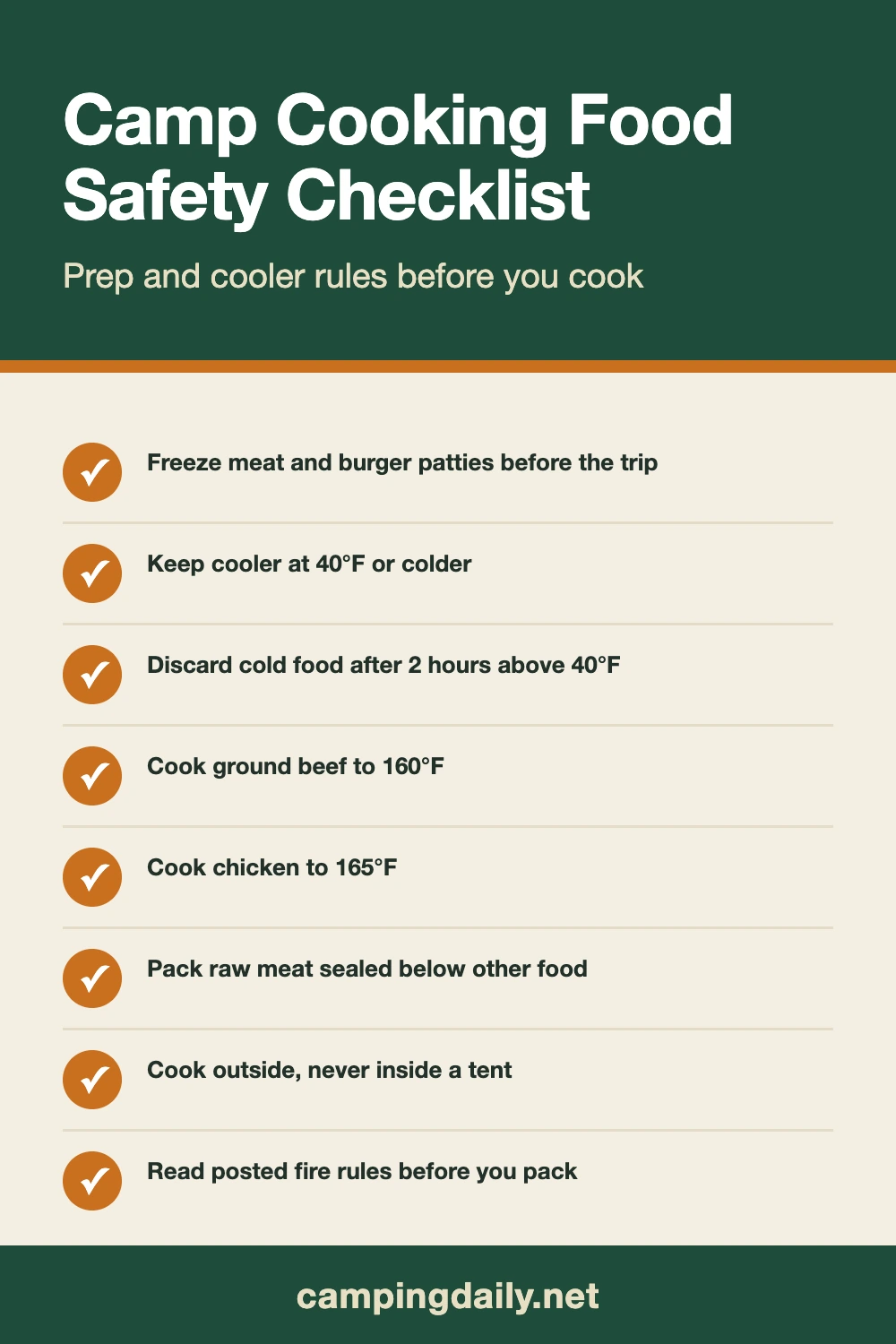
The easiest camp out recipes are foil packet dinners, skillet hash with eggs, burgers or sausages over coals, a Dutch oven chili, and s’mores or a dump cake for dessert. Each needs one heat source and one pan or a sheet of heavy foil. Freeze the meat before you leave, keep the cooler at 40°F or colder, and cook ground beef to 160°F and chicken to 165°F.
Ten easy meals to cook while camping
| Meal | Cooks on | What you prep at home |
|---|---|---|
| Foil packet hamburger dinner | Coals | Slice carrots, potatoes, onion; form patties |
| Pastrami or sausage hash with eggs | Skillet over coals or stove | Dice and par-boil potatoes |
| Breakfast burritos | Skillet or foil on grate | Scramble and fill at home, freeze, reheat wrapped in foil |
| Sloppy joes | Dutch oven or large skillet | Chop pepper and onion |
| Shish kabobs | Grate over coals | Cube meat, marinate, skewer |
| Camp chili | Dutch oven or pot | Pack canned goods with a can opener |
| Pie iron pizza sandwiches | Coals | Pack bread, sauce, cheese |
| Mac and cheese | Stove or foil pans | Pre-cook noodles, mix with cheese |
| Campfire nachos | Foil pan or Dutch oven | Pack chips, cheese, beans, toppings |
| Dump cake | Dutch oven with coals | Pack cake mix, fruit filling, butter |
How to cook over a campfire without burning dinner
Flames are for boiling water and starting coals. Cook over glowing coals once the wood has burned down and the flames are low. Rake most of the coals to one side for a hot zone and leave the other side with few or no coals for a cool zone. If something chars outside while the middle is still raw, slide it to the cool side and cover it.
A camp stove is the better choice for pancakes, eggs, rice and sauces, anything that needs steady low heat. It also keeps working when the wood is wet. Some fire restrictions still allow stoves with a shut-off valve, but not all do, so read the posted rules for your campground before you pack charcoal and firewood. With only a fire grate and no stove, build the menu around foil, skillets and skewers.
Cook outside and downwind of the tents. A stove, grill or fire used inside a tent, camper or vehicle can fill the space with carbon monoxide, and tent fabric ignites fast.
Camping breakfast recipes
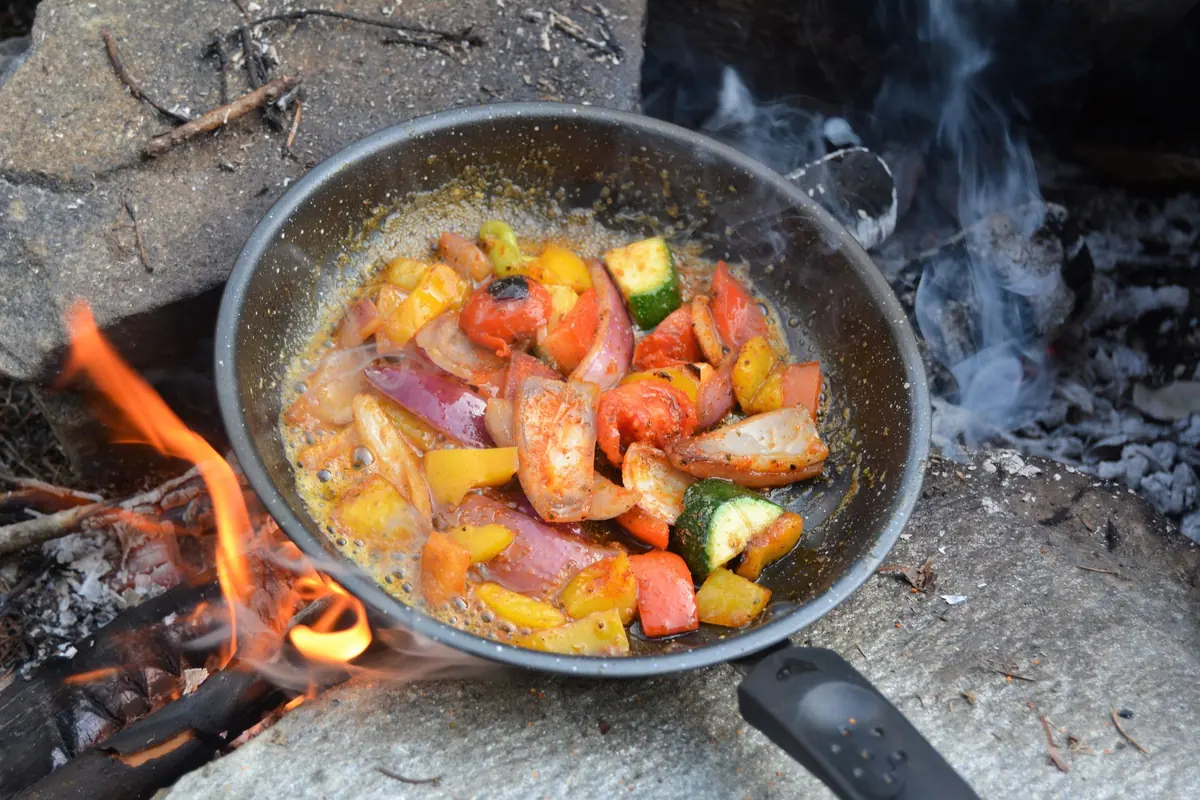
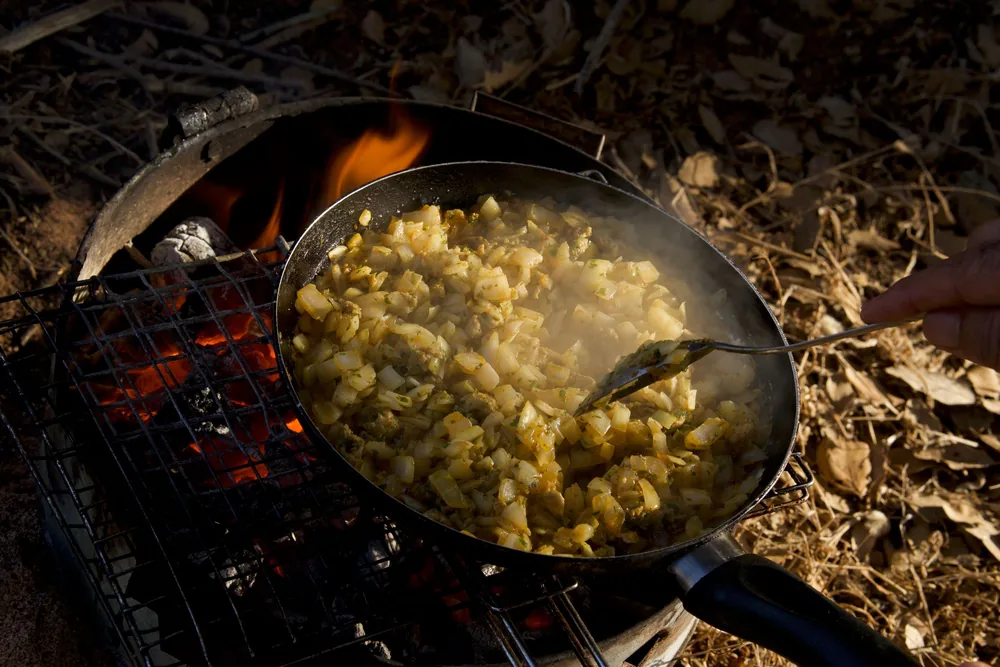
Skillet hash and eggs. Dice two or three potatoes small and par-boil them at home, then chill them in a zip bag. At camp, fry them in oil in a cast iron skillet with chopped onion until the edges brown. Stir in diced pastrami, ham or cooked sausage at the end, since it only needs warming through. Make wells, crack in an egg per person, cover the pan with foil or a lid, and cook until the whites are fully set. Cooked potatoes, meat and eggs all spoil, so plan hash for day 1 or 2.
Breakfast burritos are a make-at-home job. Scramble eggs with sausage and cheese, roll them in tortillas, wrap each in foil and freeze. Frozen burritos will help keep the cooler cold at first, but how long depends on the cooler and the weather, so rely on ice and a thermometer and eat them early in the trip. At camp, set the foil bundles over medium coals and turn them until the center reaches 165°F, checked with an instant-read thermometer.
For a crowd, an egg and bagel casserole in the Dutch oven feeds a lot of people. You need 1 lb pork sausage, 4 everything bagels, 12 eggs, 1½ cups half-and-half and 2 cups (8 oz) sharp cheddar, plus ½ cup each of green onions and red bell pepper, ½ tsp salt and ¼ tsp pepper. Brown the raw sausage first so it is cooked through. Cut the bagels into 1-inch cubes (roughly 8 cups), then whisk the eggs with the half-and-half, salt and pepper and keep that bowl cold until the last minute. Grease the pot, layer bagels, sausage, vegetables and cheese, pour the egg mixture over the top, and put coals under the pot and on the lid. It is done when the center reads 160°F.
On mornings with no fire, pack breakfast food that needs no refrigeration for at least four days: instant oatmeal, nut butter, tortillas, dried fruit, shelf-stable milk boxes and granola. Pre-ground coffee and a pour-over cone weigh almost nothing.
Foil packet recipes
A basic hamburger batch uses 1 lb hamburger, a handful of sliced carrots, 2 potatoes, 1 large onion, and salt, pepper and garlic salt. Some cooks add 1 can of cream of mushroom soup for gravy. Divide it into individual portions on sheets of heavy-duty foil, fold the foil over and crimp the edges into a sealed pouch. Use two layers, because thin foil tears on a hot coal.
Lay the packets on coals, not in flames, and turn them once or twice. Open one carefully (steam burns) and check that the potatoes are tender and the beef has reached 160°F. If the potatoes are still hard, close the packet and give it more time.
The same method works with southwest chicken, corn, peppers and salsa; BBQ turkey with sliced potatoes; Cajun shrimp with broccoli and potatoes; and zucchini boats, which are halved zucchini topped with sauce, cheese, basil and oregano. Chicken has to reach 165°F. Cut chicken or shrimp into small even pieces so the center cooks before the edges dry out, and slice the potatoes thin, since they are the slowest item in the packet.
Dutch oven and skillet dinners
Without a Dutch oven, a large cast iron skillet with a foil-covered top can handle sloppy joes, chili and most one-pot sauces. Baking is where you really miss it.
Sloppy joes. Brown 2 lb hamburger, add ½ green pepper and ½ medium onion (both chopped), 1 can original Rotel and 1 jar of BBQ sauce, and simmer until thick. Serve on hamburger buns. Everything except the meat can be chopped at home, which makes this a good first-night dinner.
Lentil joes for vegetarians. Simmer 1 cup green lentils in 4 cups water with 1 chopped yellow onion, 1 green bell pepper, 2 garlic cloves, 3 tbsp chili powder, 2 tsp smoked paprika, one 15-oz can of tomato sauce, 2 tbsp yellow mustard, 3 tbsp ketchup, 3 tbsp maple syrup and 1 tsp salt, until the lentils are soft and the sauce is thick. Check the labels on your ketchup and buns if you cook for someone who avoids animal products.
Summer chili. This version is all vegetables: one zucchini, one red pepper, one green pepper, a package of mushrooms, a red onion, and cans of corn and pinto beans, seasoned with garlic salt. Simmer it in the Dutch oven until the zucchini softens. Shredded cheese, sour cream and cilantro go on at the table.
A camp roast in a cast iron Dutch oven takes roughly 2.5 hours, so start it early and keep adding coals as the first ones burn down.
For baking, put more coals on the lid so the top browns. For stews and braises, put most of the heat underneath. Lift the lid sparingly, since every peek lets heat out, and rotate the pot a quarter turn every 15 minutes or so to avoid hot spots.
If you own no Dutch oven, a heavy pot with a snug lid, or a deep skillet covered with foil and coals on the foil, handles stews and baked dishes in smaller batches.
BBQ camping meals and grilling
A cooking grate over the fire ring or a small portable grill handles all of this.
For kabobs, thread chunks of meat (about 1 lb), mushrooms, onions, green peppers and pineapple on skewers and brush with teriyaki sauce. Soak wooden skewers in water first, or use metal ones. Chicken skewers take well to a chimichurri marinade, which needs about 30 minutes and can be made at home, or to a yogurt-and-spice base like the one behind chicken tikka. Apple cider vinegar as a marinade base helps tenderize grilled chicken.
Form burger patties at home and freeze them with a square of parchment between each. Cooked sausages only need heating, but raw ones such as bratwurst need a thermometer, and pork should reach 160°F.
Almost any fish works in a chowder or stew except very oily fish like mackerel. If you cook clams, soak them in cold, salted water (roughly seawater strength) so they purge grit. Plain fresh water is not reliable and can kill them. Mussels follow the same recipes.
Do not reuse a marinade that held raw meat as a sauce unless you boil it first. Use separate plates and tongs for raw and cooked meat.
Pie iron recipes
A pie iron is a hinged cast iron or aluminum clamp on a long handle. Grease both insides with butter or cooking spray, put a slice of bread in each side with filling between them, close the clamp, trim any overhanging edges, and hold it over coals. Turn it every minute or two and open it to check. It takes a few minutes per side, and if the bread looks dark but the filling is cold, move it higher over the heat.
Savory fillings that work: pizza sauce with mozzarella and pepperoni; egg, cheese and cooked sausage or bacon for a breakfast sandwich; shredded cooked chicken, buffalo sauce and cheese sealed in biscuit or crescent dough; and a crunch wrap of tortilla, taco meat, cheese and tostada. For sweet versions, spread pancake batter in the iron with blueberries, press canned pie filling between bread, or seal Rolo candies and marshmallows in crescent roll dough.
Without a pie iron, wrap a sandwich in foil and press it on a skillet. You lose the crimped edge but keep the toast.
Camp breads and pizza
Biscuit dough bakes in the Dutch oven with coals piled on the lid. Cornbread goes in the same way, which makes it a natural side for a pot of chili. Damper is a plain dough that bakes in the pot or wraps around a stick, and it can carry a savory filling like cheese or ham or a sweet one.
Plain biscuits, cornbread and damper hold for a few days in a sealed container. Once cheese, ham or egg goes inside, treat the bread like any other cooler food and eat it soon.
Pizza dough from home should travel cold, then sit at room temperature for at least one hour before you stretch it. Dough mixed at camp needs about 45 minutes to rise. Cook it on a hot skillet, grate or a cookie sheet suspended over coals, and add toppings sparingly so the center cooks through.
Camping desserts
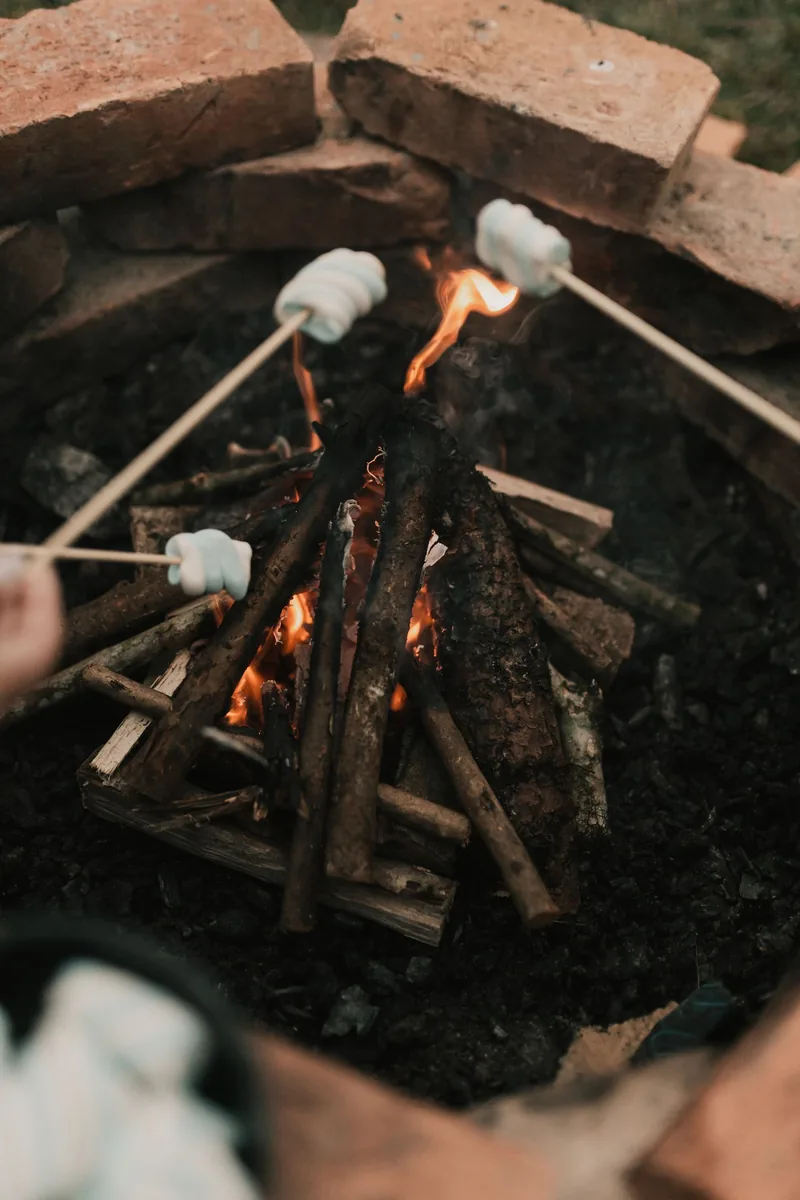
Classic s’mores take a peanut butter cup in place of the chocolate bar without complaint. For a crowd, s’more dip is easier: melt 1 bag of chocolate chips and 1 bag of marshmallows together in a foil pan or Dutch oven, adding ¼ cup milk if you want it looser. Keep it over low coals until the marshmallows puff and brown, then scoop with a box of graham crackers. Melted sugar sticks and burns, so keep small children back from the pan.
Dump cake is a Dutch oven job. Spread a can of apple pie filling across the bottom, sprinkle a dry box of cake mix evenly over it, dot the top with butter pats and pour a can of Sprite over everything. Set the lid on with coals piled on top and bake until the topping is set and you can see no dry powder.
Baked apples are simpler. Core one apple per person, fill the center with brown sugar and butter, wrap tightly in foil and set on coals until soft.
Three more work on a stick:
- Pineapple cobbler. Mix 2 tbsp brown sugar, 1 tbsp flour and ½ tsp nutmeg, coat 8 pineapple spears, then wrap each spear in a crescent roll from a tube of 8. Roast over coals and top with caramel, pecans and coconut.
- Cinnamon twists. Wrap cinnamon roll dough around a stick and roast it, then roll in ¼ cup sugar mixed with 2 tsp cinnamon and brush with 2 tbsp melted butter. Add the tube icing at the end.
- Mock angel food cake. Dip cubes from a loaf of French bread in 1 can sweetened condensed milk, roll in coconut flakes if you like, and toast.
Skillet brownies need only a cast iron pan, a bowl and a whisk, and they bake on a grate over the fire or coals. For ice cream, skip the fire entirely: seal milk or cream, vanilla and sugar in a small bag, set it inside a gallon zip-top bag packed with ice and ice cream salt, and shake until it firms. Kids can take that job.
What to make ahead for camping
Raw meat is the best thing to prep at home, because it can ride frozen. Marinated chicken, beef or pork goes into zip bags in the freezer and thaws in the cooler while helping keep other food cold. Chop onions, peppers and carrots into bags, and par-boil potatoes for hash and foil packets.
Pre-cooked noodles mixed with cheese sauce heat in foil or take-out boxes as mac and cheese. Pre-cooked pasta mixed with cheese or cream sauce is a perishable cooler food, so keep it cold and eat it on the first day or two. Alternatively, pack the pasta and sauce separately. Pancake or waffle batter rides in a squeeze bottle, kept cold. A small container per recipe holds the exact spice blend. Cake mix, chocolate chips and graham crackers need no cooler at all.
How long meat stays frozen depends on the cooler and the weather. On a trip of more than two days, use the frozen meat for the first one or two dinners and shift to canned beans, shelf-stable sausage or pasta later.
Keeping food safe in a cooler
Perishable food should stay at 40°F or colder. USDA guidance is that cold food should not sit above 40°F for more than 2 hours, or 1 hour when the air temperature is above 90°F. After that, discard it. On a long drive to camp, that clock starts in the car.
Pack the cooler in layers:
- Block ice or frozen jugs at the bottom, since they melt slowly.
- Frozen meat on top of the ice.
- Dairy, eggs and other cold food above that.
- Loose ice poured around everything.
- Produce on top.
Keep raw meat sealed and below ready-to-eat foods so juices cannot drip onto them. Bring a small appliance thermometer and check it each morning. Cooking food that has already sat too long in the danger zone does not make it safe, so throw it out instead.
Use two coolers when you can: one for food, opened rarely, and one for drinks, opened constantly. Keep the food cooler in shade and cover it with a blanket. Food in sealed bags or containers stays out of the meltwater.
Some foods skip the cooler. Hard, aged, low-moisture cheeses keep well unrefrigerated for a few days, more safely if whole, vacuum-sealed or waxed, but heat shortens that time. Dried sausage, nut butters and tortillas also travel without ice. Whole, uncut produce usually does too, but chopped vegetables and anything cut should stay in the cooler.
Wildlife, cleanup and waste
Food storage rules are set by the campground or park, so read the posted rules for your own site. At parks with bears, store all food, trash and scented items in a bear box or in a locked vehicle, not in your tent.
For dishes, scrape food scraps into a trash bag, wash in a basin 200 feet from streams and lakes (a standard Leave No Trace distance), strain out food bits, and scatter the strained dishwater broadly. Pack out leftover grease instead of pouring it on the ground. Let the fire burn down to ash, pour water on it, stir, and keep adding water until the ashes are cool to the touch.
A three-day camping menu
| Breakfast | Lunch | Dinner | Dessert | |
|---|---|---|---|---|
| Day 1 | Hash and eggs | Sandwiches and fruit | Foil packet hamburger dinners | S’mores |
| Day 2 | Breakfast burritos reheated in foil | Tortilla wraps with nut butter or deli meat from the cooler | Kabobs with rice or bread | Baked apples |
| Day 3 | Cold cereal or granola with shelf-stable milk | Leftover kabob meat in wraps (only if kept cold) | Chili with cornbread in the Dutch oven | Dump cake |
Frequently asked questions
What are some classic campfire recipes?
Hot dogs and s’mores top the list because both cook on a stick with no pan. After those come foil packet dinners and baked apples, which sit on coals, and pie iron sandwiches, which are held over the coals. Dutch oven chili and biscuits suit a longer stay, since they need a pot and some fire tending.
What are 10 easy meals I can cook for camping?
Start with the table near the top of this page. The easiest of the ten are the foil packet hamburger dinner, hash with eggs and the Dutch oven chili, because each needs one sheet of foil or one pot and almost no cleanup. Sloppy joes and mac and cheese are close behind.
What food should I premake for camping?
Burger patties, marinated meat and breakfast burritos can all be frozen. Chopped vegetables, par-boiled potatoes and pre-cooked pasta for mac and cheese save the most time at camp. Pack the frozen meat on top of the ice layer, as in the cooler-packing steps, and cook it first, because raw meat and seafood are the most perishable foods once thawed.
How do I keep meat and eggs safe without a fridge?
Use a cooler with block ice and hold it at 40°F or colder. Throw out anything that has been above 40°F for more than 2 hours, or 1 hour when it is over 90°F. Freeze meat before the trip, keep raw meat sealed below other food, and check a thermometer in the cooler each morning.