The easiest camping breakfast is overnight oats: mix rolled oats, milk and a topping in a jar the night before, keep it in the cooler, and eat it cold at camp with no cooking. For something hot, scrambled eggs in a skillet on a camp stove are the simplest. The 24 ideas below are grouped by cooking method.
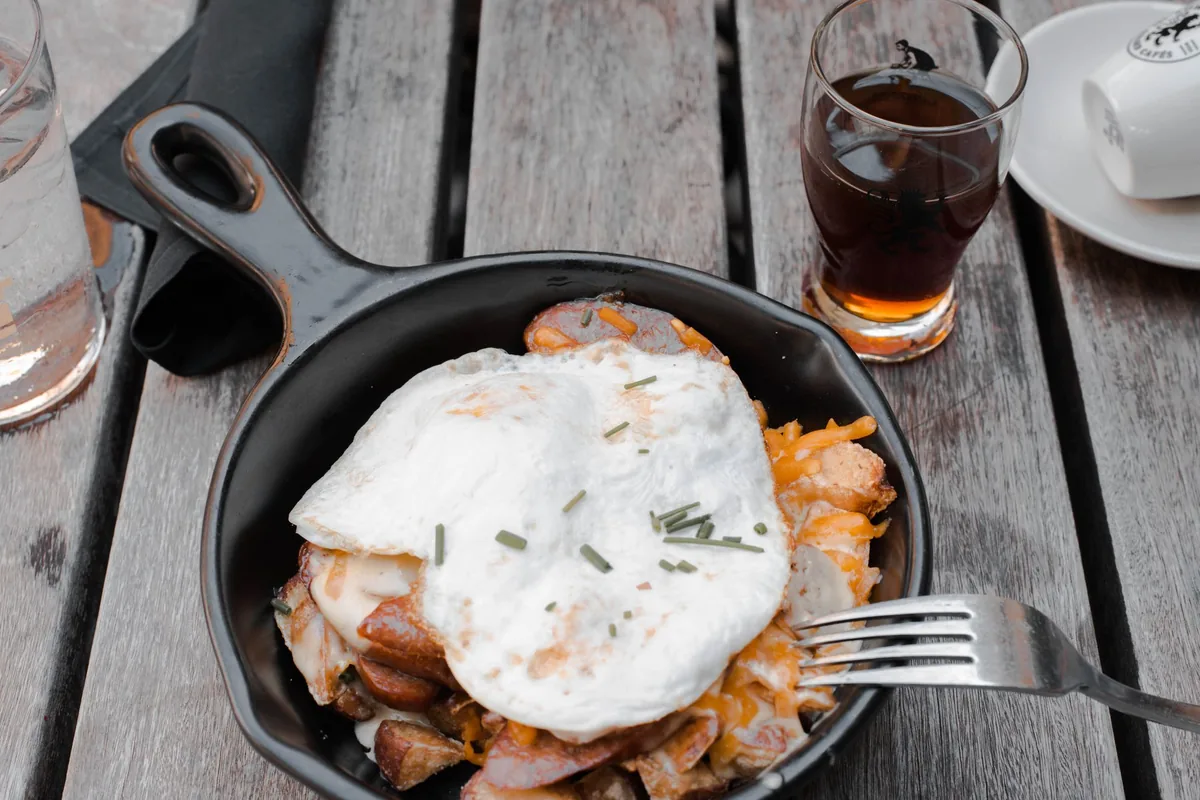
Most of them work with one cast-iron skillet and a two-burner stove. Put a good pat of butter in the pan before eggs or pancakes, because cast iron sticks without it. Keep the cooler below 40°F (4°C), and don’t leave perishable food out more than 2 hours (1 hour above 90°F). Dinner and lunch dishes are in the camp out recipes hub.
No-cook breakfasts
Six options need no flame, which helps on a rainy morning or after a late arrival. They also suit a windy or dry day, when an open flame is the main worry, though you should still check current fire restrictions for the area. The worst cleanup is a jar or a bowl.
1. Overnight oats
Combine rolled oats with milk or yogurt and fruit in a lidded jar the evening before, and put the jar in the cooler with ice. Eat it cold, or warm it a little on the stove if the morning is chilly.
2. Yogurt with granola and fruit
Spoon full-fat Greek yogurt into a cup and add granola, honey and berries. Homemade granola can be made before the trip: a batch yields about 7 cups and takes 50 minutes in a home oven. Store-bought is fine. Yogurt goes on the coldest layer of the cooler, and the granola travels in its own sealed bag so it stays crisp.
3. Cereal and milk
A bag of cereal, a bowl, milk from the cooler. A half-gallon of milk takes up cooler space and goes fast, so on longer trips shelf-stable boxed milk is less hassle. It needs no cold storage until it’s opened.
4. Apple granola stackers
Slice an apple into rounds, spread nut butter on each, press granola on top and stack them. Wrap the stack in foil or plastic for a hike. Slice the apple just before serving, because it browns.
5. Bagels with toppings
Bagels are sturdy and pack well. Top them with cream cheese, peanut butter or sliced cheese, and toast them over a grate if a fire is going.
6. Chia seed pudding
Stir chia seeds into milk with a little honey in a jar the night before. By morning it has thickened into a pudding, with no eggs and no heat. The gel-like texture divides people, so make a jar at home first if you’ve never had it.
Camp stove breakfasts
A two-burner stove gives you far more heat control than a fire, which matters for eggs, pancakes and anything that scorches.
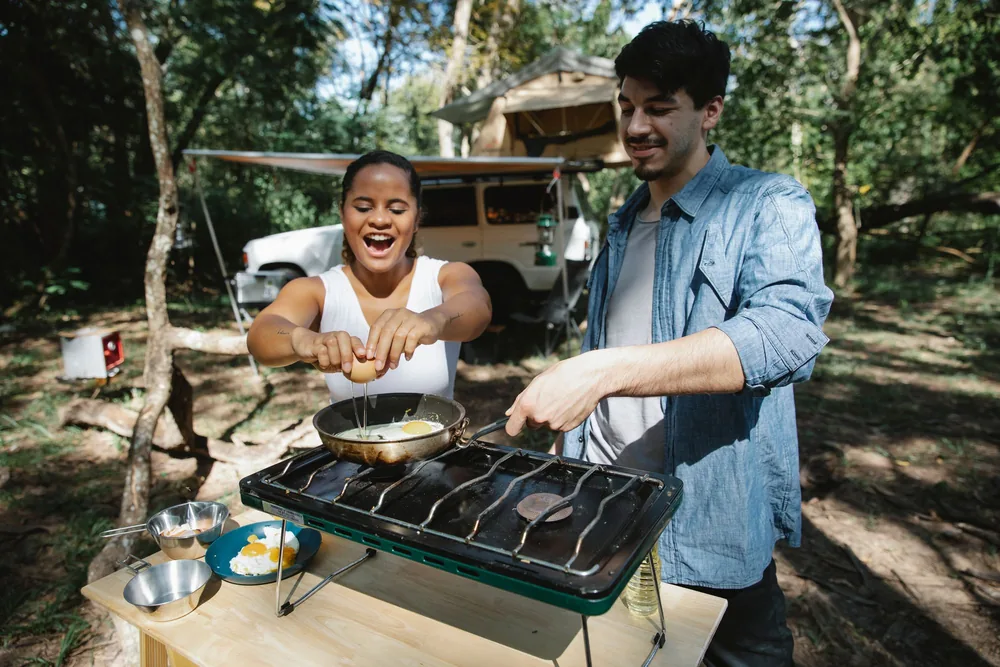
7. Scrambled eggs
Melt butter in a skillet over medium-low heat, pour in beaten eggs with a splash of milk and a pinch of salt, and stir gently until they set. Fold in pre-cooked bacon, sautéed peppers, spinach or cheese at the end. If shells are a nuisance, crack the eggs into a lidded container at home and keep it at or below 40°F (4°C) in the cooler the whole time. Use those eggs within a day or two, and throw them out if the cooler warms up.
8. Egg in a hole
Cut a circle from a slice of bread with a cup or a camping knife. Butter the skillet, lay the bread in it, and crack an egg into the hole. Flip once if you like, and cook until the white is fully set. Plan on about 15 minutes. A standard skillet holds one or two at a time before they run together.
9. Pancakes from a jar mix
Measure dry pancake mix into a jar at home. At camp, add eggs, milk and canola oil, stir, and pour onto a buttered griddle or skillet. One batch makes about 8 pancakes. Let the batter rest a few minutes, and flip when bubbles form and the edges look set. Wind and hot spots tend to ruin the first pancake, so turn the flame down and treat that one as a test.
10. Pancakes without eggs
Stir flax meal into water and let it thicken, then use it in place of the eggs. The pancakes come out slightly denser. Bring extra butter and maple syrup, since the batter itself is less rich.
11. French toast
Dip bread in beaten eggs, milk and cinnamon, then fry in butter until browned on both sides. Bread a day or two old soaks up the mixture without falling apart. It needs a bowl, a skillet and a plate, so it makes more dishes than most entries here.
12. Stovetop oatmeal
Cook rolled oats with milk, honey and cinnamon in a pot, following the package directions for the liquid. One pot feeds a crowd and the ingredients are cheap. Stir more as it thickens, since oats scorch on the bottom of thin camp pots.
13. Breakfast quesadillas
Scramble eggs first, or use leftover cooked eggs from the cooler. Fold them into a tortilla with sharp cheddar and peppers, onions, bacon or sausage. Cook in a dry skillet until the cheese melts and the tortilla browns. Go easy on the filling, or it squeezes out at the flip.
14. Fruity crepes
Pour thin batter into a non-stick skillet with melted butter and cook until golden. Fill with strawberries, bananas or blueberries. Clumpy batter loosens with a splash of milk until it swirls. Thin crepes tear, so practice the flip at home.
Campfire breakfasts
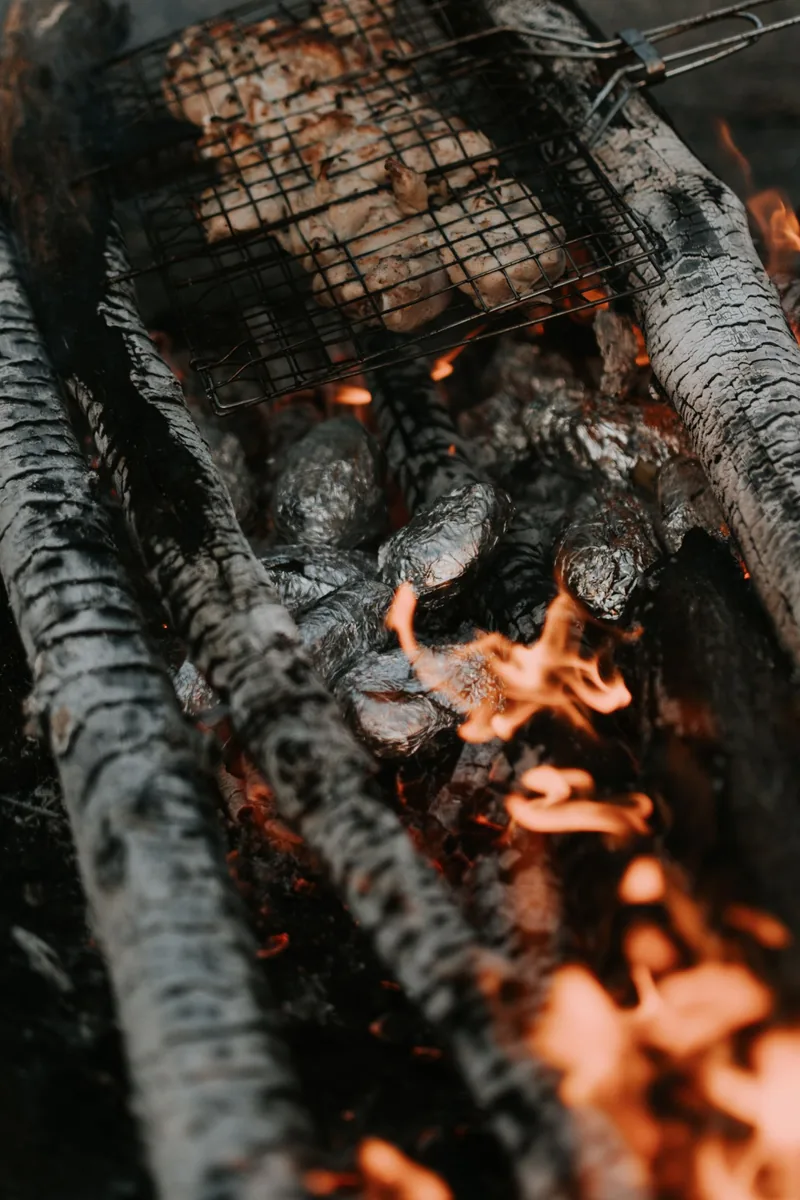
Wait until the flames have burned down to coals. A grate over coals holds steadier heat than one over flames, and a long-handled spatula or tongs keeps your hands back. The times here come from recipes written for home cooks, so start checking for doneness earlier than the clock says.
15. Foil-packet potatoes and sausage
Chop potatoes and sausage, add oil and seasoning, and seal everything in a double layer of foil. Total time is about 50 minutes for 8 servings. An egg can go in near the end, cooked until the white is fully set. Open each packet away from your face, because the steam burns, then test a potato with a fork and cut into a sausage piece to check the middle.
16. Cheese hash brown packets
Seal hash browns, bacon and cheese in foil with an egg on top. Plan on about 30 minutes for 4 servings. Cook the bacon before packing, since raw bacon and egg in one packet may not cook through evenly. Turn the packets partway, as the side facing the coals cooks faster.
17. Campfire hash in a skillet
Brown potatoes, onion, peppers and sausage in a cast-iron skillet on a grate over coals. A version with one can of corn and one can of chiles saves cooler space, though you’ll need a can opener. Allow about 55 minutes for 6 servings.
18. Dutch oven bacon and egg bake
Layer hash browns, cooked bacon, eggs and cheese in a camp Dutch oven, cover it and set it over coals. It runs about 1 hour 5 minutes and serves 8. Give the pot a quarter turn now and then, since one side always cooks faster. If the center still jiggles, put the lid back on and wait.
19. Eggs in avocado
Halve an avocado, remove the pit, scoop out a little extra flesh and crack an egg into each half. Wrap each half in foil and set it on a grate over coals, not in open flame. Cook until the egg white is fully set and the yolk is firm. Young children, older adults, pregnant people and anyone with a weakened immune system should not eat runny yolks. Open the foil away from your face to check.
20. Foil-wrapped campfire bread
Cut cinnamon bread into pieces, toss with blueberries, nuts and an egg-and-milk mixture, and wrap in foil with a little room inside. It takes about 40 minutes and serves 8.
21. Campfire cinnamon twists
Wrap store-bought cinnamon roll dough around clean metal skewers and toast over coals. Keep the dough away from direct flame, brush with butter and cinnamon sugar, and rotate constantly, because the sugar burns fast. Count on about 25 minutes and 16 servings.
Make-ahead breakfasts
22. Freezer breakfast burritos
Scramble eggs with cheese and other fillings, roll them in tortillas, wrap in foil and freeze at home. One egg-burrito recipe makes about 10 burritos in 25 minutes of work. At camp, reheat a foil-wrapped burrito over coals or a grill, turning it often, until it’s hot throughout. Frozen ones also help keep the cooler cold on the first day. Or carry the fillings in a container and cook the tortilla at camp.
23. Mini frittatas
Bake egg-and-vegetable portions in a muffin tin at home, wrap them in foil and warm them on a grate at camp until steaming hot. A full veggie frittata takes about 30 minutes and serves 6.
24. Oatmeal bars and breakfast cookies
Bars made with oats, chia, quinoa and dried fruit take about 1 hour 15 minutes and yield 9 servings. Breakfast cookies can be baked ahead in bulk. Store both in an airtight container and keep them out of the sun in the car.
What to pack
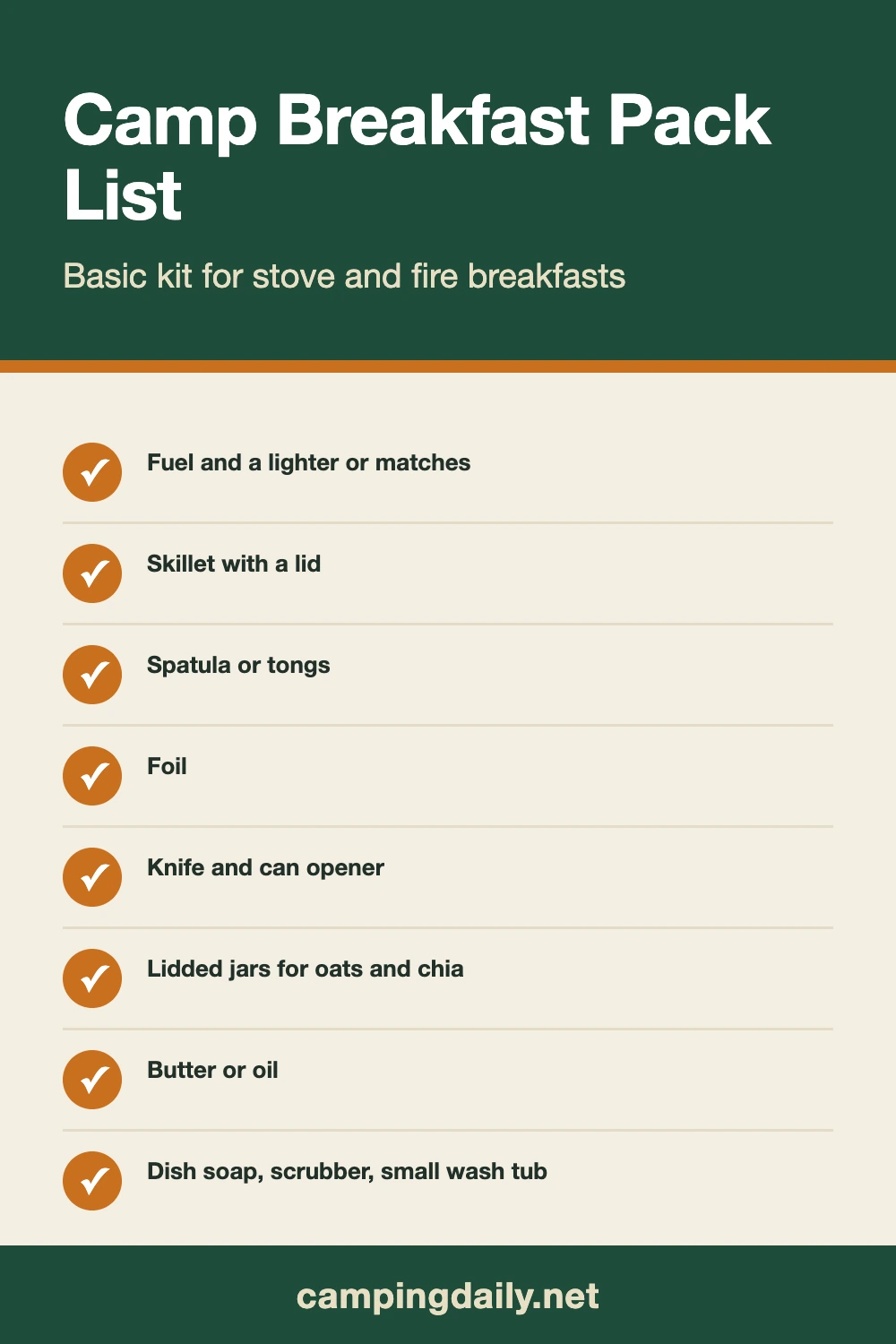
Fuel and a lighter or matches come first, then a skillet with a lid, a spatula or tongs, foil and a knife. Add a can opener if the campfire hash is on the menu, a couple of lidded jars for the oats and chia, and butter or oil. For cleanup, dish soap, a scrubber and a small tub for wash water cover it. The full gear list by category is in things to pack for camping.
For menus across a longer trip, how to plan a camping trip covers the broader prep.
Frequently asked questions
What is the easiest camping breakfast to make?
Overnight oats. Fill the jar the night before, keep it in the cooler, and the morning job is opening the lid. Yogurt with granola is nearly as quick: a spoon, a cup and a cold cooler. Neither involves open flame, which can help on a windy or dry day, but check current fire restrictions for your area.
What camping breakfast can be made without a campfire?
Overnight oats, chia seed pudding, yogurt with granola, cereal, bagels and make-ahead oatmeal bars all work with no flame. For something hot, a camp stove may be allowed, but fire-ban rules vary and some bans restrict or prohibit portable stoves. Check the land manager’s current restrictions before cooking.
What is an easy camping breakfast that doesn't call for eggs?
Stovetop oatmeal, chia pudding, cereal and yogurt with granola contain none. For pancakes, stir flax meal into water, let it thicken, and use it in place of the eggs. Expect a slightly denser pancake than the egg version.
Can I prep breakfast burritos at home and freeze them?
Yes. Roll scrambled eggs and fillings in tortillas, wrap each in foil and freeze. At camp, reheat over coals or a grill, turning often, until hot all the way through. Carrying the fillings in a container and cooking the tortilla fresh also works.
How do I keep eggs from sticking in a skillet?
Add a good pat of butter before the eggs go in and keep the heat at medium-low. Cast iron works on a stove or a campfire grate, but it needs that layer of fat. Hold off scraping until the eggs have begun to set.
What is a frittata compared with a quiche?
Both are beaten eggs set with vegetables, cheese or meat. A quiche sits in a pastry shell, while a frittata has none, so there’s no crust to crumble in a cooler. Individual frittata portions baked in a muffin tin at home reheat easily on a camp grate.