Cowboy coffee is coffee made by heating coarse grounds in water in an open pot, letting the grounds sink, and pouring the liquid off without a paper filter. It comes from cattle-trail and frontier cooking in the American West, and it’s still the simplest way to make coffee at camp when the drip machine and French press stayed at home.
What does “cowboy coffee” actually mean?
The term describes a method, not a bean. Coarse grounds go into a pot with hot water, the pot sits for a few minutes, a splash of cold water drops the grounds to the bottom, and you pour slowly. No filter, no machine, no paper.
People also stretch the phrase to cover any rough, strong-looking coffee drunk from a tin mug beside a fire. A bag labeled “cowboy blend” is a marketing label for a medium-dark or dark roast, nothing more.
The name and style are traced to the mid-to-late 1800s on the American frontier, when a cook might have a pot, a fire and little else. Brands like Arbuckle’s sold pre-roasted, pre-ground coffee in airtight one-pound packages, which made brewing simpler for Westerners. Coffee is only one part of a camp menu, and the camp out recipes hub covers the rest.
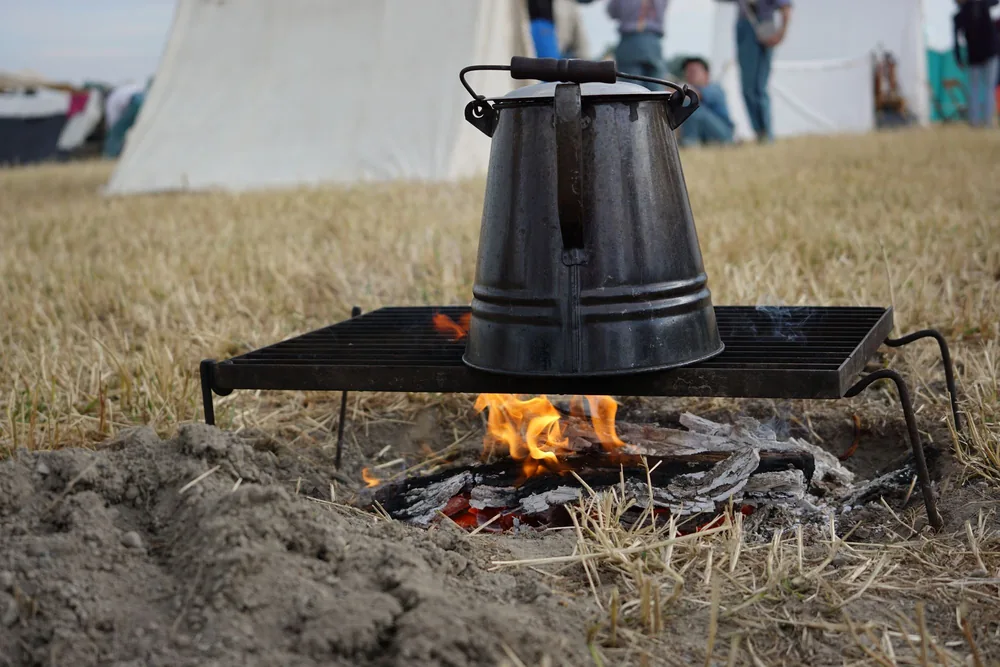
Compared with other brews, cowboy coffee sits close to a French press without the plunger and mesh. Turkish coffee also simmers grounds and serves them unfiltered, but it uses very fine grounds in a small pot called a cezve and is served with foam. Cowboy coffee goes the other way: coarse grounds, a big pot, and a settling step so the sediment stays behind.
What you need
| Item | What to use | Note |
|---|---|---|
| Pot | Enamel-coated pot, tin pot or any metal pot with a spout | Enamel pots run from about 1 quart to 3 gallons. |
| Coffee | Coarse grounds, roughly the size of coarse salt | Fine grounds turn to sludge and won’t settle. |
| Water | Clean, neutral-tasting water | Avoid distilled or heavily chlorinated water. |
| Heat | Campfire grate, camp stove or burner | A stove gives you more control than coals. |
| Cold water | A cup or bottle | A splash, roughly ¼ to ½ cup for a typical pot, more for a very large one. |
| Mug | Enamel or tin | Pre-warm it with a splash of hot water if it’s cold out. |
| Optional | Clean cloth, bandana or fine mesh strainer | A last-resort filter for the final pour. |
A thermometer helps but isn’t required. Timing in step 2 stands in for it. The pot, fuel and mugs are easy to leave behind, so check them against the list of things to pack for camping before you load the car.
How to make cowboy coffee
Measure 2 tablespoons of coarse coffee for every 8 ounces of water. Two big camp mugs, about 16 ounces in all, take 4 tablespoons. The steps below bring the water to a boil first and add the grounds after the pot leaves the heat, which is easier to control than simmering grounds in the flames.
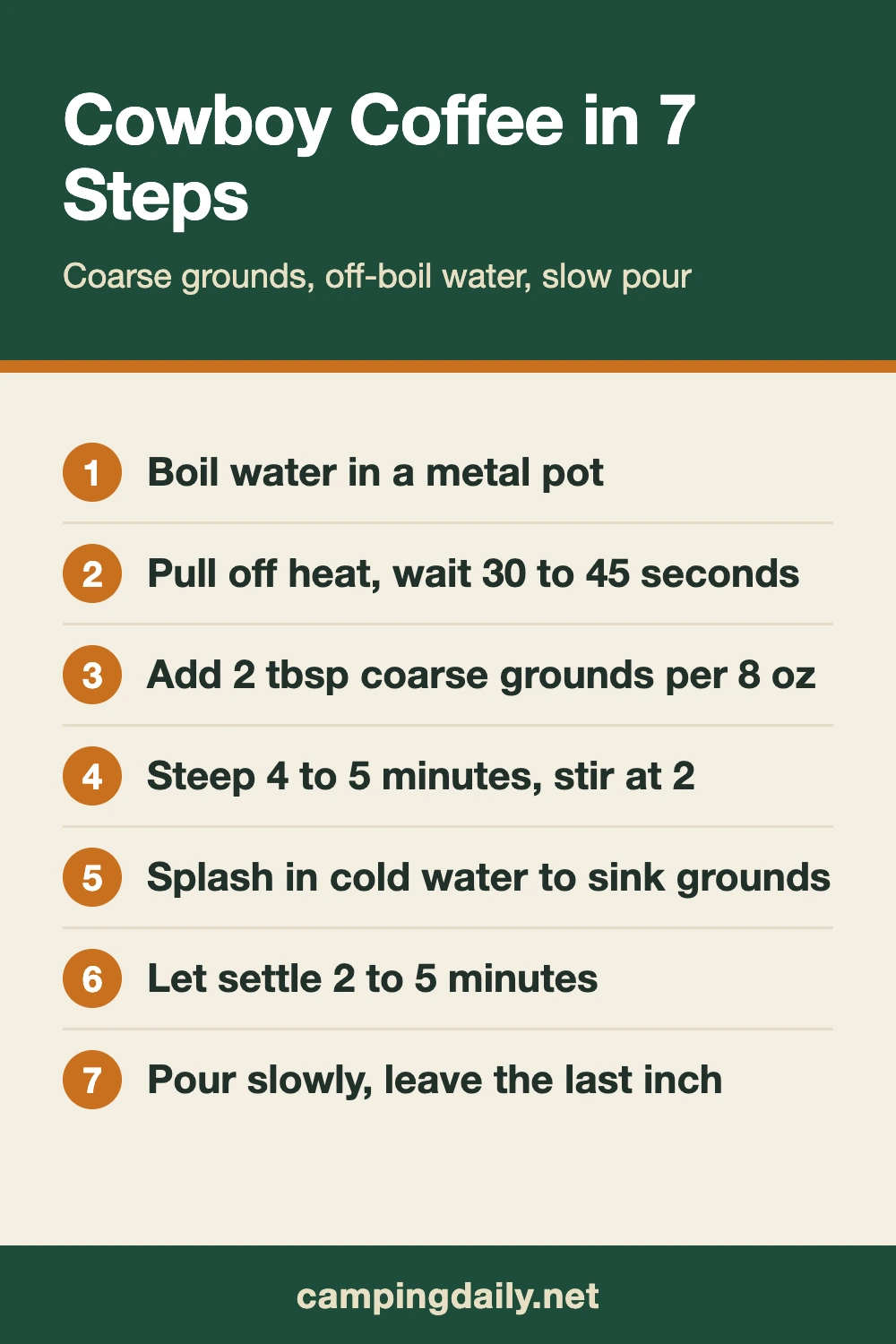
- Heat the water. Pour the measured water into the pot and bring it to a full boil over the fire or stove.
- Take it off the heat and wait. Let the pot sit 30 to 45 seconds. That brings the water to roughly 195 to 205°F, just under boiling. Letting the water cool slightly before adding grounds is said to reduce bitterness.
- Add the grounds. Stir in 2 tablespoons of coarse coffee per 8 ounces. One stir is enough to wet everything.
- Steep for 4 to 5 minutes. Stir again at the 2-minute mark and cover the pot if you have a lid. The longer end gives a stronger cup.
- Settle the grounds. Pour in a splash of cold water, roughly ¼ to ½ cup for a typical pot. A very large pot takes more. Kent Rollins uses about a cup in a 2-gallon pot. The cold water helps the grounds sink and also stops extraction.
- Wait 2 to 5 minutes. An undisturbed pot gives a clearer cup.
- Pour slowly. Tilt the pot gently, keep the stream steady, and stop with about an inch of liquid left. The sludge sits in that last inch.
The traditional trail method skips the cooling pause. The grounds go into the cold water and the whole pot comes to a boil together, and Rollins boils it for 2 to 3 minutes. Boiling the grounds for a long time tends to give a harsher, more bitter cup. If you go the traditional route, boil briefly, pull the pot off the heat, then add the cold splash.
Larger batches
For a few people, scale the ratio straight up. For a crowd the method doesn’t change, but the ratio often does. Rollins’ 2-gallon pot takes about 1½ cups of grounds. That’s 24 tablespoons in roughly 256 ounces of water, or about 0.75 tablespoon per 8 ounces, well under the 2-tablespoon standard. His 3-quart pot recipe uses about ¾ cup, which is also milder. At 2 tablespoons per 8 ounces, a 3-quart (96-ounce) pot would need 24 tablespoons, or 1½ cups.
Settling tricks
Cold water is the most widely recommended trick, and the one in the steps above. Waiting a few extra minutes does more than any other add-on, and a coarse grind done at home before the trip does more than waiting.
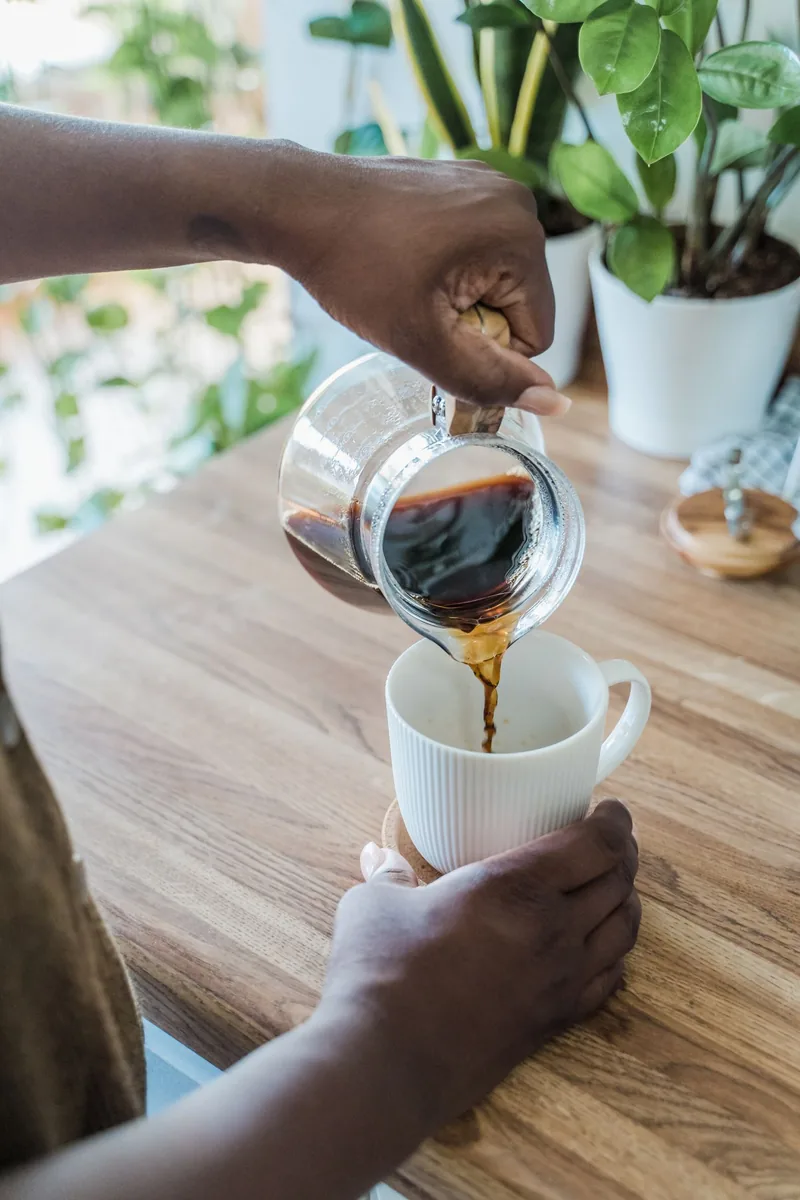
A clean cloth over the mug catches the last of the grounds in the final pour. Use one that has never touched soap residue or anything else you wouldn’t drink.
Skip the crushed eggshell. Some cooks drop one in to help grounds sink, but the evidence is thin, the claim that it removes acid isn’t well supported, and raw shells can carry bacteria. If you use one anyway, start with a clean shell and bring the coffee to a boil.
Mistakes that ruin the pot
Boiling the grounds hard for a long time is the classic one. Extra minutes at a boil don’t pull out more flavor, and the cup turns harsh. A 1945 book, Western Words, quotes an old wagon cook as saying to boil two pounds of Arbuckle’s for two hours and throw in a horseshoe; if it sinks, it isn’t ready. Treat that as a joke, not a method.
Grind and pouring speed cause most of the grit. Fine grounds slip through the settling step and leave a muddy cup, and a fast pour stirs the sediment back up. Skipping the cold-water splash leaves grounds floating, so the first pour is gritty.
Water matters too. Distilled water tastes flat and heavily chlorinated tap water tastes off, so use filtered or bottled water if the campsite tap is questionable.
Boil-overs can waste a pot of coffee or cause burns. Stay at the pot and use a glove or pot grabber on the handle, since metal and enamel handles get hot enough to burn.
Don’t leave grounds in the pot overnight. Follow the campground rules for disposal: scattering grounds near camp can attract wildlife, so pack them out in a trash bag where required, as Leave No Trace guidance advises. Don’t pour grounds into a stream or lake, and wash the pot before it dries.
Is cowboy coffee stronger than regular coffee?
It depends what you mean by strong. Joseph Rivera of Coffee Chemistry says coarse grounds extract less, which can make the brew weaker and less bitter than one made with a fine grind. But the cup has fine particles and no paper filter, so it tastes heavy and bold, and plenty of people read that as strength.
One estimate puts caffeine at roughly 115 to 150 mg per 8-ounce cup, depending on brew time, ratio and beans. Long hot steeps extract more caffeine. For a stronger pot, add a tablespoon more coffee or steep a minute longer.
Is cowboy coffee healthier?
Cowboy coffee is not harmful in moderation by one account, but it isn’t healthier than filtered coffee. Paper filters trap most of the cafestol and kahweol, two compounds in coffee oils that can raise cholesterol. Unfiltered methods, including cowboy coffee, French press and Turkish coffee, let more through. A study in Nutrition Journal puts the figure at about 4.43 mg of cafestol per unfiltered cup against 0.09 mg paper-filtered, and it links heavy daily intake of unfiltered coffee to higher serum cholesterol. Those numbers cover cafestol only, not kahweol.
One or two cups at camp are unlikely to matter. If you drink several unfiltered cups a day at home and watch your cholesterol, ask your doctor.
What does it taste like?
Heavy-bodied, a little bitter, and gritty in the last swallow. A pot set near the fire can pick up some smoke. Grind size and how long the grounds sat at a hard boil change the cup more than anything else, and many drinkers take it black.
Frequently asked questions
What does "cowboy coffee" mean in slang?
People mean coffee brewed in an open pot and poured off without a filter, or loosely any rough, strong-looking outdoor coffee. On a bag, “cowboy blend” is a marketing label for a medium-dark or dark roast, not a special bean or a regional blend.
What does the term "cowboy coffee" mean?
It’s coffee made by steeping coarse grounds directly in a hot pot, then letting them settle to the bottom instead of straining them out. A splash of cold water speeds the settling. The style is traced to cattle-trail and frontier cooks in the mid-to-late 1800s.
Is cowboy coffee healthier than filtered coffee?
No. Without a paper filter, more cafestol and kahweol, compounds in coffee oils that can raise cholesterol, end up in the cup. Occasional camp cups are unlikely to matter much. If you drink several unfiltered cups every day and watch your cholesterol, ask your doctor.
Is cowboy coffee stronger than regular coffee?
Caffeine runs roughly 115 to 150 mg per 8-ounce cup by one estimate, shifting with brew time, ratio and beans. It tastes heavier because fine particles stay in the cup. For a stronger pot, add a tablespoon of grounds or steep a minute longer, since long hot steeps pull out more caffeine.
Do I need a special pot?
No. An enamel-coated pot is the classic choice, but any metal pot with a spout and a handle works. A lid helps during the steep. Avoid thin pots that scorch and anything with a plastic handle near the fire, and use a glove or pot grabber when you lift it.
How do I stop the grit?
Grind coarse, take the water off the boil before adding grounds, and wait the full 2 to 5 minutes after the cold splash. Stop pouring with an inch left in the pot. For the last cup, pour through a clean cloth or fine mesh strainer held over the mug.