The right heater for camping depends on whether the site has power. With no hookup, a small propane radiant unit with a tip-over switch and a low-oxygen shut-off (the 3,800 BTU Mr. Heater Little Buddy class) suits a small tent. With a hookup, a 1,500 W electric heater adds no combustion gases to the tent. To size either one, multiply the tent’s floor area in square feet by 40. Run any fuel-burning heater only with a carbon monoxide alarm and open vents.
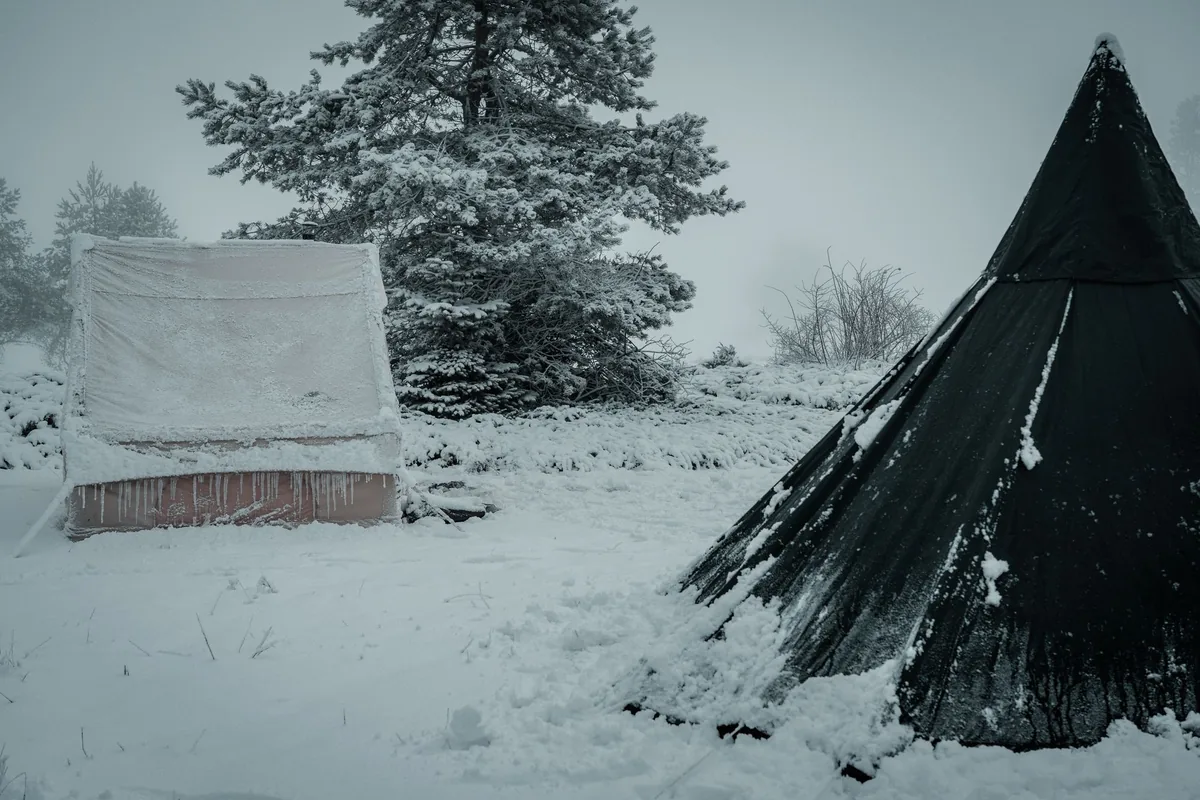
A heater is the last layer, not the first. Sort out the pad and the bag first (the packing list covers them), then match the heater to the shelter. A two-person dome, a cabin tent and a camper van need three different answers.
How much heat do you need?
The sizing rule takes interior floor area in square feet and multiplies it by 40 to get the largest BTU rating worth considering. It comes from household heating and assumes an 8-ft ceiling, so treat the result as a cap, not a target. A 100 sq ft tent works out to 4,000 BTU. One review recommends a heater of at least about 2,000 BTU, though very small tents may need less.
Going too big has its own cost. Reviewers note that even the Buddy’s lowest setting can be more than a small tent needs, and a hot radiant surface in a small space sits close to fabric and gear. Listings for 30,000 and 45,000 BTU “tank-top” propane heaters also turn up in camping searches. By the same math, a 45,000 BTU unit is sized for roughly 1,100 sq ft, far beyond any tent.
Cold shifts the numbers. One reviewer found the Little Buddy too weak below 40°F in a camper. Rated coverage figures are manufacturer claims, so read them as the best case.
Heater types and how each one fails
Unvented propane radiant heaters run on 1 lb cylinders, and some models take a hose to a 20 lb tank. They fail through carbon monoxide, tip-over and condensation. They fit a tent or camper while you’re awake and the vents are open.
Catalytic propane heaters burn gas without a flame, on a refillable tank (5 lb on the Camco Wave-3). They cost a lot more, they still need ventilation, and they make no fan noise, which makes them a camper choice where silence matters.
Butane canister units are small, run briefly, and some have no tip-over or oxygen sensor. Brief warm-ups only, never overnight.
Electric heaters draw from shore power, a generator or a battery station, and each source fails differently. A campsite circuit trips its breaker, a battery runs flat, and a small unit may not put out enough heat to notice. Diesel heaters pair diesel fuel with a 12V battery and belong in vans and campers, not tents. Their fuel caps can leak, and altitude can hurt performance.
Product listings also include dual-fuel (propane and iso-butane) models. Several state that the fuel or tank is not included, so cylinders are a separate purchase.
Propane radiant heaters
The Mr. Heater Buddy line covers most tent use, and the models differ a lot in output and burn time.
| Model | BTU | Rated coverage | Weight | Runtime on 1 lb cylinder |
|---|---|---|---|---|
| Mr. Heater Little Buddy | 3,800 | 95 sq ft | about 5 lb | 5.6 hours, single heat setting |
| Mr. Heater Buddy | 9,000 | 225 sq ft | 10.6 lb | About 6 hours low, 2.4 to 3 hours on high |
| Mr. Heater Big Buddy | 18,000 | 450 sq ft | about 11 lb | Two cylinders: 10.8 hours low, about 3.5 hours high |
| Texsport-style | 2,890 | 72 sq ft | 2 lb | About 7 hours |
The Little Buddy has tip-over and low-oxygen shut-off, and it suits small shelters up to about 95 sq ft. In a smaller two-person tent it may be more heat than you need.
The Buddy is the flexible one, but its burn time on high is short. Published figures run from 2.4 to 3 hours per 1 lb cylinder, so a long evening on high means carrying several. The Big Buddy can run off a 20 lb tank through an optional hose, listed at 40+ hours. That setup belongs in a camper or large tent, and the manual governs hose and tank placement. Keep the 20 lb tank outside the sleeping area.
The Texsport-style unit is light and has a long runtime, but it has only an auto shut-off valve and no tip-over switch. Skip it for any tent where someone could knock it over.
Units to rule out
The Campy Gear Chubby is listed at 9,000 BTU on a 230 g canister, with about 2.5 hours of runtime. It has no tip-over switch and no oxygen sensor. A heater missing both features doesn’t belong in a shelter where people sleep.
Catalytic heaters
The Camco Olympian Wave-3 is rated at 3,000 BTU and 130 sq ft, has no fan, and runs about 30 hours on a 5 lb refillable tank on high. It costs far more than the radiant models, so check the current price with Amazon or Camco before planning around it. It still needs ventilation, and the same CO rules apply.
Electric heaters and battery power
Electric heaters release no combustion gases inside the shelter. The catch is power. A 1,500 W ceramic unit like the De’Longhi, listed at 128 sq ft of coverage, needs shore power or a generator, and on a campsite circuit shared with other loads it can trip the breaker.
Batteries are a poor match for full-size electric heaters. A 1,500 Wh power station feeding a 1,500 W heater lasts about an hour at best, and less once conversion losses count. The units that can run for hours on a battery are tiny. For any electric model, divide the battery’s watt-hours by the heater’s watts to estimate runtime.
The Honeywell HeatBud sits at the small end. It is rated at 853 BTU, covers 21 sq ft, and draws about 170 W (250 W on high), with overheat and tip-over protection. One review calls it suited to a 2 to 3 person tent, but at that output it only takes the chill off a very small space. A reviewer found it didn’t heat their camper effectively and drew too much power from a 1,500 Wh battery to be worth it.
Diesel heaters for vans and campers
A 5 kW Vevor was listed at about $116 in a late-2024 review. In a test, it burned about 1 gallon of fuel per night and kept the interior above 80°F with outside temperatures in the 30s°F, and a 1,500 Wh battery ran it for about 40 hours.
The exhaust is routed outside through a hose, which keeps most combustion gases out of the cabin, but leaks or poor routing can still let exhaust in. A carbon monoxide detector inside is still recommended. Route the exhaust away from doors, windows and vents, and get placement advice from the manufacturer.
Two quirks to plan for. The vented fuel cap can leak while the vehicle is moving, and tape or a glove under the cap helps. At high altitude, diesel units can struggle, while a vented propane furnace works well there.
Safety features to look for on the label
Look for tip-over shutoff, low-oxygen (oxygen depletion) shut-off, and overheat protection on electric models. A proper tip-over switch cuts both the flame and the fuel supply, not just the flame. Several budget listings advertise these features, and a claim in a title doesn’t prove it. Check the manual and the product page.
Put the carbon monoxide detector near the sleeping area, not by the door. Add a propane leak detector if you run a propane unit, and keep a fire extinguisher within reach.
Unvented propane and sleep
Manufacturers rate some Buddy models for indoor use. Even so, turn the heater off before anyone falls asleep. Carbon monoxide can build up in a closed shelter, and a low-oxygen shut-off does not detect carbon monoxide, so it is no substitute for a CO alarm and open vents. One reviewer declined to run unvented propane overnight despite the indoor rating.
Warm the tent before bed, switch the heater off, and rely on insulation. A zero-degree sleeping bag is the backup if a heater fails or has to be shut down. Heater choice is one piece of planning a camping trip in cold weather.
Condensation
Unvented propane heaters add moisture. One reviewer saw water on the walls of a camper. Vented propane furnaces, such as Propex or Truma, don’t create that wet heat. In a tent, moisture settles on the fabric and then onto sleeping bags. Cracking a vent helps with both moisture and CO.
How to heat a tent safely
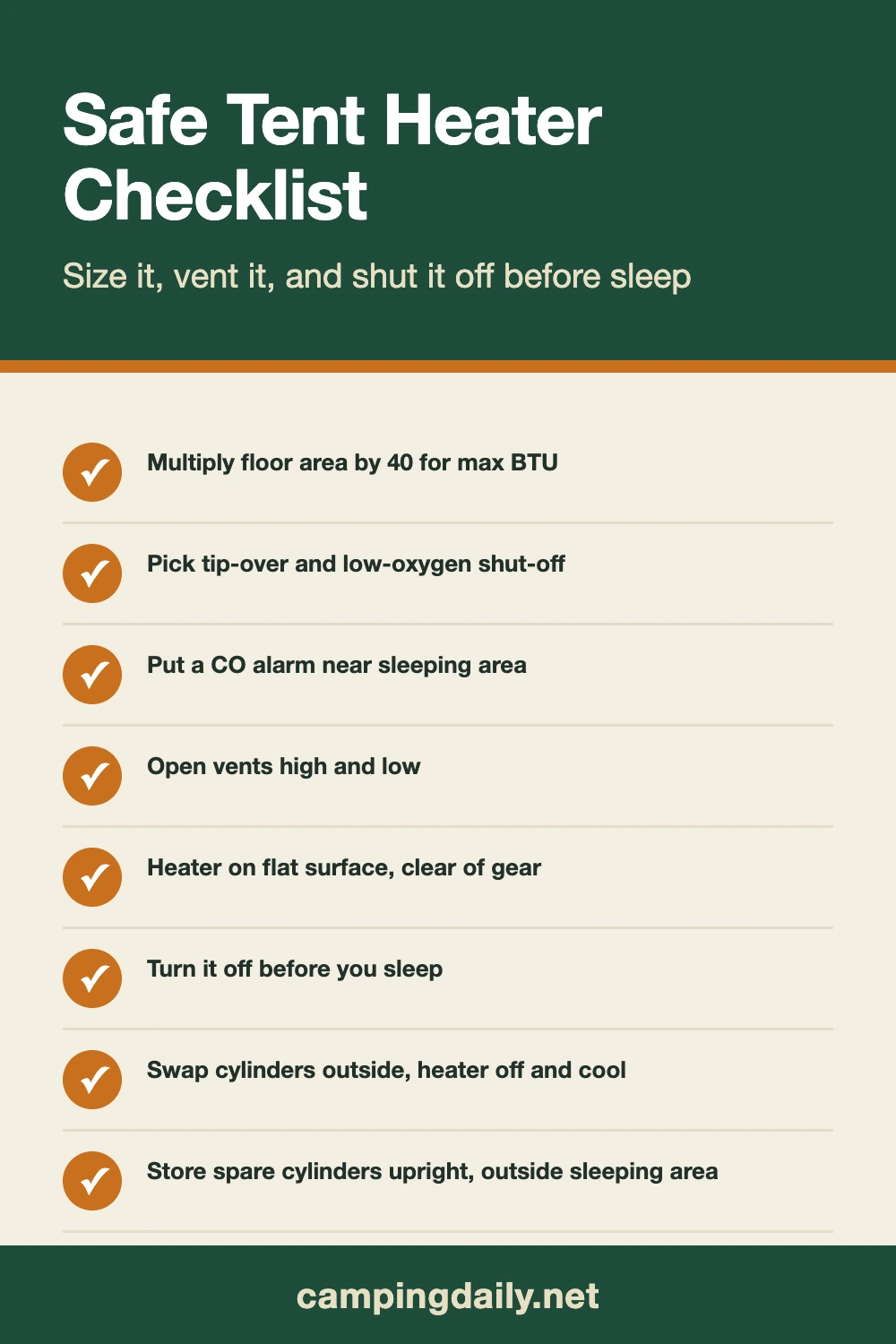
- Pitch the tent on level ground, with the door facing away from wind if you can.
- Install the CO alarm near the sleeping area before the heater goes in.
- Open vents high and low so fresh air comes in and exhaust goes out.
- Place the heater on a flat, stable surface, clear of walls, sleeping bags, clothing and gear. Follow the clearance distance in the manual.
- Light the heater following the manual, and stay awake while it runs.
- Shut it off when you leave the tent and before you go to sleep.
Don’t use a heater to dry wet gear. Wet fabric near a radiant surface is a fire risk, and the moisture adds to condensation.
Swap cylinders outside the tent, with the heater off and cooled. Store spares upright, outside the sleeping area. Leave the heater off while the vehicle moves.
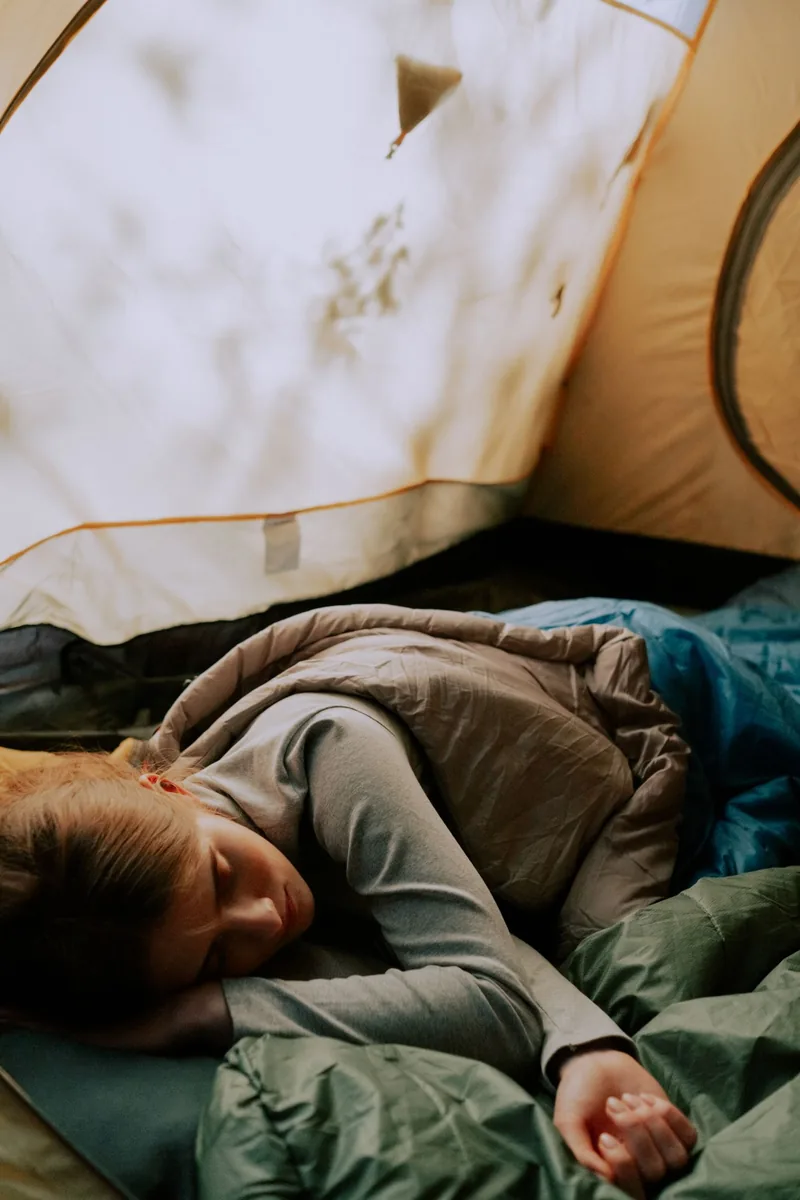
How to heat a tent without electricity
Cut heat loss before you reach for fuel. Cold ground pulls heat from your body, so a thick sleeping pad under the bag matters as much as the bag. A zero-degree bag fits real cold, and a smaller tent has less air to warm.
For active heat without power, the choices are a propane or butane radiant heater, or a catalytic heater on a refillable tank. Propane radiant heaters with tip-over and low-oxygen shut-off are sold for tent use. A catalytic heater like the Wave-3 is mainly a camper heater and still needs ventilation. Pick the smallest unit the sizing rule allows, and carry cylinders to match the runtimes in the table.
Frequently asked questions
What is the best heater for camping?
It depends on power and shelter size. A Little Buddy-class propane unit fits a small tent with no hookup, and a Buddy (225 sq ft rated coverage) fits a bigger tent. At a powered site, a 1,500 W ceramic heater avoids combustion gases entirely. In a camper where silence matters, a catalytic unit like the Wave-3 is the quiet option.
Is there a heater that can be used inside a tent?
Yes, with conditions. Propane radiant heaters with tip-over and low-oxygen shut-off are sold for tent use, and electric heaters work wherever you have power. A fuel-burning unit needs a CO alarm near the sleeping area and open vents. Switch it off before anyone falls asleep.
What is a good portable heater for camping?
Weight separates the options. The Texsport-style unit is 2 lb but has no tip-over switch. The Little Buddy is about 5 lb and the Buddy is 10.6 lb, and both have tip-over and low-oxygen shut-off. The Honeywell HeatBud is electric and light on power, but its 853 BTU only suits a very small space.
How can I heat my tent without electricity?
Start with insulation: a thick pad under a zero-degree bag. Then add a propane radiant heater or a catalytic unit on a refillable tank, with the tent vented. Warm the space before bed and shut the heater off before you sleep, since the bag has to carry you through the night.
How many BTU do I need for my tent?
Multiply interior floor area in square feet by 40. A 100 sq ft tent tops out at 4,000 BTU, and a 225 sq ft tent at 9,000. That is a ceiling, not a goal. One review suggests at least about 2,000 BTU for a noticeable effect, though very small tents may need less.
How long does a 1 lb propane cylinder last?
The Little Buddy runs about 5.6 hours on one cylinder (single setting), and the Buddy about 6 hours on low. On high, the Buddy burns through a cylinder in roughly 2.4 to 3 hours. The Texsport-style unit is listed at about 7 hours. Pack spare cylinders if you plan to run on high.
Do I need a carbon monoxide detector?
Yes, with any fuel-burning heater. Set it near where people sleep rather than by the door, and add a propane leak detector if the heater runs on propane. A low-oxygen shut-off on the heater doesn’t detect carbon monoxide, so it doesn’t replace the alarm.