
Most trailers under 3,000 lbs are small fiberglass, laminate or aluminum campers of varying length, and the 3,000 figure is almost always dry weight, not what you tow. Water, propane, batteries and gear can add several hundred pounds, so a 2,900 lb listing can easily reach 3,500 lb on the road. Check your vehicle’s tow rating against the loaded number, not the brochure.
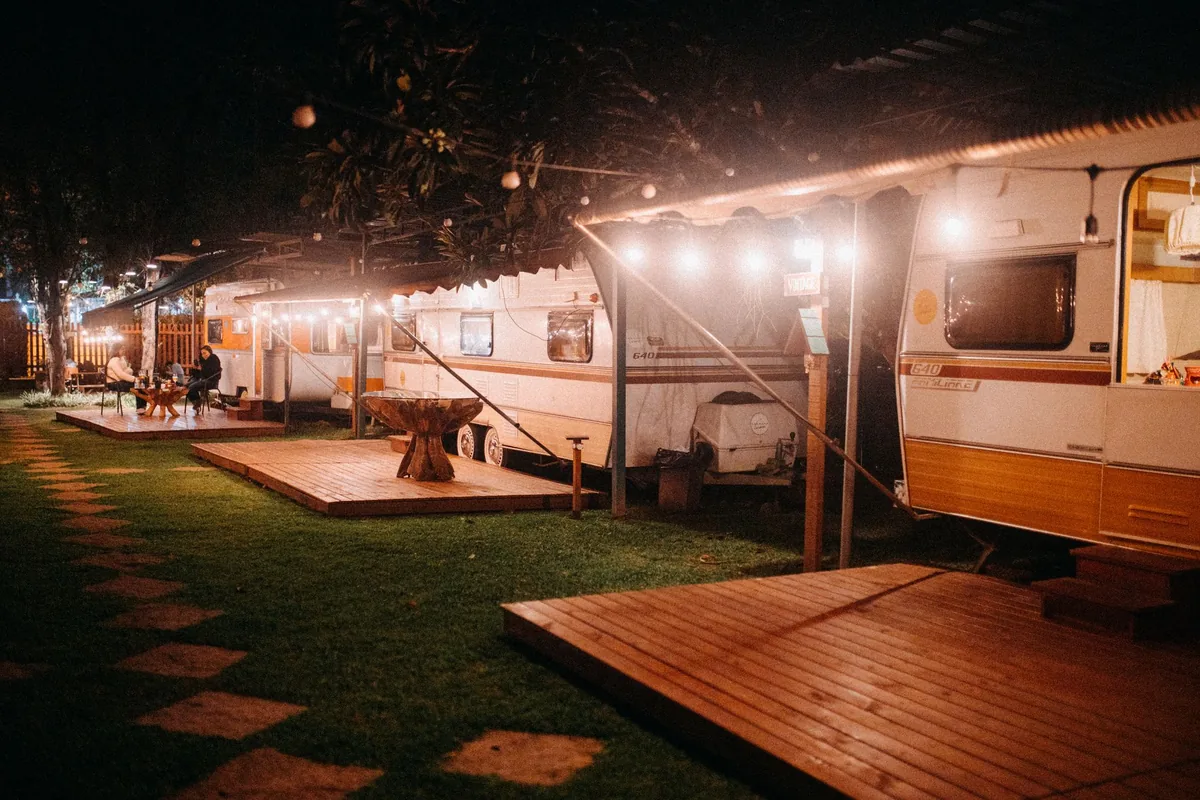
Trailer, motorhome or van is a separate decision, and the camping in an RV guide walks through it. What follows assumes you have settled on a trailer light enough for an SUV or mid-size pickup.
What “3,000 lbs” actually measures
Dry weight, also called UVW, is the trailer as built at the factory: no water, propane, batteries or cargo. That is the number in brochures. GVWR is the most the trailer is rated to weigh fully loaded, and it is printed on a sticker on the trailer itself. Tongue weight is the downward push on your hitch, listed on some spec sheets and measurable at a scale.
Light-trailer lists don’t agree on where to draw the line. Some cap at 3,000 lb dry, others at 3,500 lb dry, and some video roundups use 3,500 lb GVWR. A trailer with a 3,000 lb dry weight and a 3,800 lb GVWR tows very differently from one with a 3,500 lb GVWR total, so find out which number a listing means before comparing anything.
Even one model can carry different numbers depending on where you look. Jayco lists the Jay Feather Air SL at 2,515 to 2,920 lb across its 2027 floor plans, while another RV site gives one version as 2,995 lb dry. The InTech Luna Rover shows 1,775 to 1,850 lb on one site and 1,920 lb on a dealer listing. The sticker on the actual unit settles it.
Can your vehicle tow it?
Plenty of crossovers can’t, whatever the ad says. Pull three ratings from the owner’s manual or the door-jamb label:
- Maximum tow rating. Compare it against the trailer’s GVWR, not its dry weight, and leave a margin.
- Maximum tongue weight. Some SUVs cap this at 500 lb. A trailer whose tongue weight sits near that figure leaves almost nothing for a propane tank, a battery or a front-mounted bike rack.
- Payload. Tongue weight comes out of your vehicle’s payload, along with passengers and cargo. This is the rating people forget.
If you plan to use a weight-distribution hitch, confirm that the vehicle manufacturer allows it, since some unibody crossovers have restrictions. Trailers with electric brakes need a brake controller in the tow vehicle. A few lighter trailers have no brakes at all, and whether that is legal at a given weight depends on your state.
Now the loaded number. Fresh water weighs about 8.3 lb per gallon, so a full 40-gallon tank is over 330 lb. Two full 20-lb propane cylinders weigh roughly 70 to 75 lb together, since each empty cylinder is about 17 lb. A group 27 or 31 battery, bedding, a cooler, camp chairs and cookware can add another 200 to 400 lb. Plan on 500 to 800 lb above dry weight, and tow with the fresh tank mostly empty when you can.
Weight classes at a glance
The weights below come from published specs for specific examples, and options change them.
| Type | Example dry weights | Sleeping | Bathroom | Best fit |
|---|---|---|---|---|
| Teardrop / micro | 1,300 to 2,300 lb | 2 to 4 | None, or a portable toilet | Smaller SUVs, quick weekends |
| Fiberglass egg-shape | Around 1,900 to 2,900 lb | 2 to 3 | Wet bath, sometimes dry | Couples, long-term durability |
| Light laminate box trailer | About 2,300 to 3,000 lb | 2 to 6 | Dry or wet bath | Families, more floor space |
| Light toy hauler | Around 2,200 to 2,900 lb | 2 to 4 | Varies | Bikes, kayaks, gear |
| Pop-up or expandable | Roughly 1,300 to 3,000 lb | 2 to 4 | Rare | Low tow weight, tight storage |
At the light end, the NuCamp T@G Classic is about 1,335 lb dry with a queen mattress, and the TAXA Cricket Overland is about 1,978 lb dry with a pop-up roof that sleeps two adults and two kids. Up near the ceiling, the Airstream Basecamp 16 is about 2,650 lb dry and the Aliner Amp about 2,600 lb dry.
Sleeping layouts that matter
Bed count in a listing tells you little. What counts is whether two adults can sleep well without a nightly shuffle.
A rear or front queen you can walk around is the easy answer for couples. A bed pushed against a wall means one person climbs over the other, which gets old after a few nights, and some buyers cross off any bed they have to climb across, along with east-west beds. That one filter removes a lot of small trailers.
Convertible dinettes and couches buy daytime space and cost a few minutes every evening. The Airstream Basecamp 16 uses a bench that converts to a bed for two adults, the InTech Luna Rover works on the same idea, and the NoBo 19.2 has a queen that flips up into a couch.

With kids, look at bunk plans. The Jay Feather Air SL lists a queen plus two bunks, and the KZ Sportsmen Classic 130BH swaps the dinette for bunks. Check bunk length and weight limit before assuming an older child fits. The Rockwood GeoPro 19FD, listed under 2,900 lb dry, takes another route with a Murphy bed that frees the floor as living space. Test the mechanism, and read the weight limit the manufacturer gives for it.
Bathrooms in light trailers
A bath is the biggest single trade-off between weight and floor space at this size.
Skip it and you get the lowest weight and the most open floor, with campground facilities or a portable toilet filling in. The Aliner Amp has a swivel cassette toilet and the Luna Rover offers an optional stowaway toilet; either way you carry the cassette to a dump point. A wet bath puts toilet and shower in one waterproof room, as on the Airstream Basecamp 16, and everything in it gets soaked, so look at the ventilation. A dry bath separates the shower stall from the toilet area. Bath type varies by model, so check the floor plan. The Casita Independence floor plan has a front bathroom and is well under 3,000 lb dry, and the KZ Sportsmen Classic is among the models with a dry bath.
Owners point out small layout problems: a bathroom door that swings into the refrigerator, or an outdoor shower sitting too close to the entry door. Open every door all the way when you walk through a trailer.
Heating, cooling and cold weather
Furnace sizes vary across the class. The Airstream Basecamp 16 ships with a 12,000 BTU furnace and offers A/C as an option, while the Jay Feather Air SL lists a 19,000 BTU furnace and 13,500 BTU A/C. The KZ Sportsmen Classic goes to 20,000 BTU.
Those numbers don’t make a trailer four-season. Below freezing, what matters is insulation, window area, where the tanks sit and whether the underbelly is enclosed. Condensation inside a small, tightly closed cabin is the other winter problem. Ask the manufacturer for the temperature range the trailer is built for.
Never use an unvented fuel-burning heater (propane, kerosene, charcoal or similar) inside a tent, trailer or camper, and never run one while anyone sleeps. A working carbon monoxide alarm is a backup, not permission. Use only heaters made and rated for indoor or RV use, and follow the manufacturer’s venting instructions. The heater for camping guide covers the options in more detail.
Construction: what the walls are made of
Fiberglass shells come in two pieces, as on Casita-style trailers built since the early 1980s, and other makers copy the idea. Fewer seams mean fewer places for leaks to begin, but no shell stays leak-proof forever, so inspect the seams, roof fittings and windows.
Laminated walls with composite cores show up on several models above. The Rockwood GeoPro, NoBo 19.2 and Coachmen Apex Nano 187RB use Azdel-type cores, and Jayco describes its approach as laminated walls with a one-piece front cap. The Rockwood GeoPro 19FD and Holiday House 18RB sit on welded aluminum underframes, which resist rust but can still be damaged. A few models, such as the rPod 192, keep some wood in the structure. Wood holds up while dry, and any water intrusion turns into a bigger repair.
On a used trailer, press on the floor for soft spots, look for stains around windows and roof penetrations, and check exterior walls for delamination.
Power, solar and kitchen setups
Add up what you actually run before paying for a power package. A fridge, lights, a fan and phone charging is a modest load. An air conditioner or induction cooktop is a heavy one, and it needs inverter and battery capacity to match.
The spread among these trailers is wide. The NuCamp T@G Classic offers optional 180 W solar and a 100 Ah lithium battery, the Rockwood GeoPro 19FD lists 110 W of solar with a 1,000 W inverter, and the Airstream Basecamp 16 comes with 300 W. The Aliner Amp sits at the far end: a 5 kWh battery, 400 W of solar, a 3,600 W inverter and an induction cooktop. If you cook outside most days, a basic galley serves you better than a big indoor kitchen, and the camping recipes hub has meals that suit small galleys.
Tanks add weight fast. A 42-gallon fresh tank holds about 350 lb of water when full. The Jayco 18RBM carries that tank plus 30.5-gallon black and gray tanks, and it weighs 4,305 lb dry, far past a 3,000 lb cap. Tank sizes seldom appear in side-by-side comparisons, so ask for them.
Which type fits which situation
For a couple with a crossover or small SUV, teardrops, pop-ups and the lightest fiberglass trailers make sense, after you verify tongue weight. Dry weights under about 2,000 lb leave the most margin.
A couple with a mid-size SUV or pickup who wants a real bed and bath is looking at fiberglass egg-shape trailers or the lighter laminate models. Slide-outs are mostly off the table at this weight. That helps in tight sites, since a trailer around 16 to 20 feet can fit a pair of tandem parking spots.
Families should look at bunk plans, but check each plan’s own weight. The KZ Sportsmen Classic ranges from 2,310 to 3,300 lb dry across eight plans, with six under 3,000 lb. The Rockwood Tent line runs from 1,299 to 3,058 lb depending on the plan, so its largest versions exceed the cap.
Gear haulers have the No Boundaries 10 Series (2,179 to 2,274 lb dry) and the Rockwood GeoPro 19TH, which carry bikes or kayaks inside. Most of the wider No Boundaries line is over 3,000 lb, so check each floor plan.

For rough roads, ground clearance and tires matter more than the sticker. The TAXA Cricket Overland is described as having upgraded off-road tires and better clearance than the standard Cricket. For any other trailer sold as off-road capable, ask for ground clearance, suspension type and axle details in writing.
What these trailers cost
The figures below are examples as of October 2026. Confirm current prices with a dealer.
| Model | Dry weight | Price noted | Currency |
|---|---|---|---|
| Jayco Jay Feather Air SL (2027) | 2,515 to 2,920 lb | From $20,918 | USD |
| Jayco Jay Flight (range) | 2,450 to 8,655 lb | From $17,768 | USD |
| Keystone Hideout Mini 120BT | 2,620 lb | About CA$19,995 (MSRP CA$23,695) | CAD |
| Forest River R-Pod Classic RP-171C (2024, used) | 2,576 lb | About CA$23,995 | CAD |
| Keystone Coleman Light 17RX | 2,770 lb | About CA$27,995 | CAD |
| InTech Luna Rover | 1,775 to 1,920 lb | About CA$37,995 | CAD |
| Modern Buggy Big Buggy BB14 | 2,295 lb | About CA$41,995 | CAD |
| Oliver (Casita-style fiberglass) | Not listed | Just under $50,000 | USD |
All the Canadian prices come from one dealer’s listing, and some of the listings are marked as special-buy pricing while quantity lasts, so those units may be gone. Listing prices also leave out registration, insurance, a hitch, a brake controller and sales tax.
Safety limits to respect
Overloading, or poor weight distribution, is a common way a small trailer goes wrong. Take a 2,900 lb dry listing and add 800 lb of water, propane, battery and gear: that is 3,700 lb behind a vehicle that may be rated for 3,500. At or near its rating, a tow vehicle handles worse in wind and passing traffic and brakes longer. Too little tongue weight lets a trailer sway. Keep tongue weight within the trailer maker’s range, and load heavy items low and slightly forward of the axle.
Before the first trip of the season, check tire pressure and date codes, lug nuts, brake and light connections, roof sealant and electrical connections. Repeat the check after any long haul. Route planning matters too, since a small rig still needs fuel stops and sites it can pull through; the road trip plans guide and the camping trip planning guide cover that, and the packing checklist helps you keep gear weight in check.
Buying new versus used
Used trailers are plentiful at this size. Look for water stains and soft floors, run every appliance on both propane and 12V power, read the tire date codes (tires age out even with good tread), confirm the title and VIN match, and watch for signs of a repaired frame or axle. Ask for a photo of the weight sticker before you drive anywhere to see the unit.
Buying new, ask about warranty terms, where service is done and how long parts take to arrive. Factory-direct fiberglass makers may have fewer service locations than a large dealer network.
Frequently asked questions
Are the weights on trailers under 3,000 lbs dry weight or loaded weight?
Dry weight, meaning the trailer empty with no water, propane, battery or gear. Loaded, expect 500 to 800 lb more. The GVWR on the sticker is the ceiling to use in towing math, so compare that number with your vehicle’s tow rating.
Can a crossover or small SUV tow a 3000 lb trailer?
Some can, many can’t. Read the tow rating, maximum tongue weight and payload in the owner’s manual. Some SUVs cap tongue weight near 500 lb, which a few trailers approach. For smaller vehicles, a trailer under 2,000 lb dry leaves the most room.
Is there a travel trailer under 3,000 lbs with a real bathroom?
Yes. The Airstream Basecamp 16 (about 2,650 lb dry) has a wet bath, and the Casita Independence floor plan has a front bathroom and is well under 3,000 lb dry. Plenty of others use a cassette or portable toilet instead. Bath type varies by model, so check the floor plan.
Do trailers under 3,000 lbs have slide-outs?
Few do. The Lance 1575 (2,775 lb dry) has a slide, but most light trailers skip them to save weight and keep the shape compact. That also means a lower profile and fewer moving parts to maintain.
What is the difference between a micro RV and a little guy trailer?
People use “micro RV” for any very small camper, from teardrops to compact fiberglass trailers. “Little Guy” is a brand of teardrop-style trailers, and some people use it as shorthand for the whole style. Neither has an official weight cutoff, so read the specs of the specific model.
Are travel trailers under 3,000 lbs good for winter camping?
It depends on construction, not weight. Ask the maker for the rated temperature range and whether the tanks and underbelly are enclosed. For heat, use only equipment rated for indoor or RV use, never an unvented fuel-burning heater, and keep a working CO alarm in the cabin as a backup.
How much does a trailer under 3,000 lbs cost?
As of October 2026, the Jay Feather Air SL starts at $20,918 USD, the Canadian dealer listings above run from about CA$19,995 to CA$41,995, and Oliver fiberglass trailers sit just under $50,000 USD. Used units cost less. Sale prices change quickly, so confirm with a dealer.
A public truck-stop or landfill scale will tell you what the loaded rig really weighs.