A foil packet is a sealed pouch of aluminum foil holding a protein, vegetables and a little fat or sauce, cooked on a grill, over campfire coals or in an oven. The fold traps steam, so food cooks gently and you eat from the foil with almost nothing to wash. Most packets finish in 20 to 50 minutes depending on how dense the ingredients are, and the real skill is matching those ingredients so nothing finishes early.
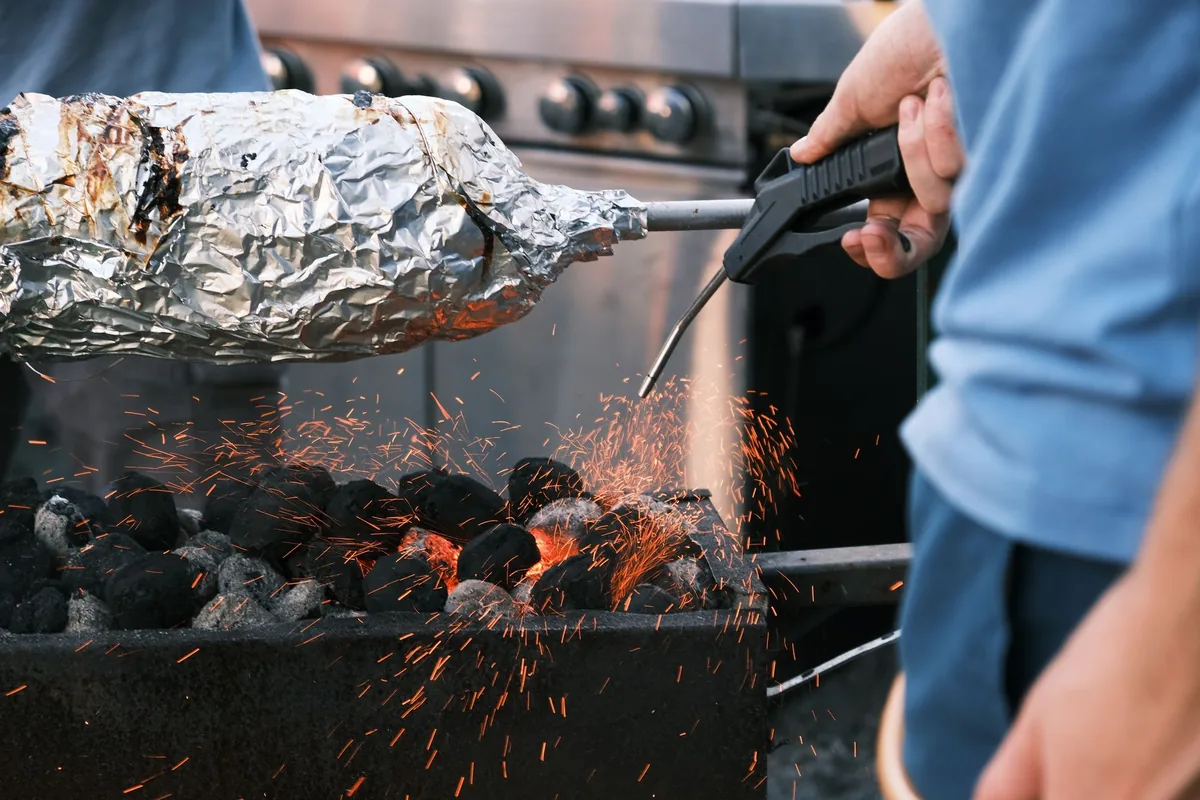
How to make a foil packet
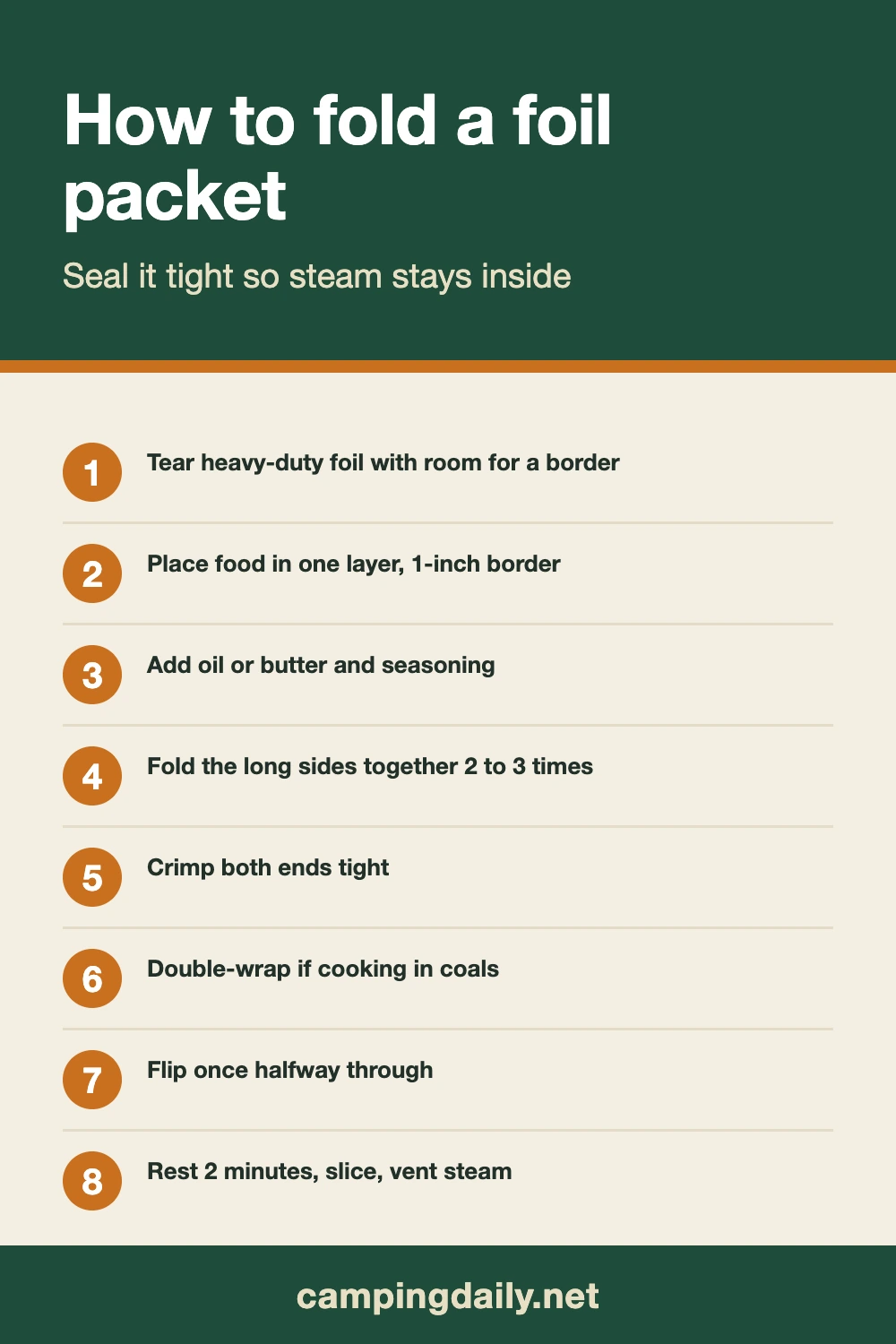
- Tear a sheet of heavy-duty foil big enough to leave a border around the food and fold the edges over it.
- Put the food in the center in a single layer. Leave at least a 1-inch border of bare foil all the way around.
- Add fat and flavor: a spoonful of oil or a pat of butter, salt, pepper, herbs, a splash of sauce.
- Bring the long sides together over the food and fold the seam down two or three times.
- Fold in each short end the same way, crimping tightly so steam cannot escape.
- For campfire coals, wrap the whole packet in a second layer of heavy-duty foil.
Overfilled packets burst at the seams and cook unevenly, so make two smaller packets instead of one fat one. Flip the packet once halfway through. On a grill with a closed lid you can often skip the flip.
Which foil to use
Heavy-duty foil is the practical choice. One layer is usually enough on a grill grate or in an oven. Regular foil tears easily, even when doubled, and a torn packet on coals means grease in the fire and half-raw food.
Use two layers when the packet sits directly in coals, as with fire-roasted sweet potatoes. Leave non-stick foil at home for campfire cooking; plain heavy-duty foil does the same job without a coating you have to think about.
If you’d rather not have food touching aluminum at all, put a sheet of parchment between the food and the foil, or cook in a cast iron skillet.
Where to cook foil packets
| Heat source | How to use it | Watch for |
|---|---|---|
| Grill | Set packets on the grate and keep them away from direct flame; check doneness rather than relying on a set heat level | Hot spots near the flame burn the bottom |
| Campfire coals | Wait for glowing coals, not flames; set packets on or beside them | Thin foil, flare-ups, uneven heat |
| Oven | Place on a sheet pan, around 350°F | Useful in a cabin, or at home as a trial run |
Flames blacken the foil and scorch the food. Coals give gentler heat than open flames, but it varies from spot to spot, so check doneness. Some campers lay cabbage leaves under the food as a buffer against the fire. Treat that as a campfire habit, not a tested method.
Matching ingredients so everything finishes together
Raw potatoes next to salmon is the classic failure: the fish overcooks while the potatoes stay hard. Sort that out before you fold, not after.
- Cut long-cooking items small. Potatoes cut into small pieces cook far faster than big chunks.
- Parboil dense root vegetables for a few minutes before packing.
- Pair items that cook alike. Salmon and asparagus both roast in roughly 10 to 15 minutes.
- Watch moisture. Mushrooms and zucchini release water and make a packet soupy. Fatty ground beef leaves a pool of grease, so drain or pre-brown it and put the wet vegetables near the top.
Sausage-and-pepper packets, or any packet built from pre-cooked ingredients, are the easiest for a first attempt. Raw potatoes set the clock at about 50 minutes.
Group 1: Chicken foil packets
1. Honey mustard chicken with tomato and zucchini
Chicken breasts, tomatoes and zucchini with a honey mustard sauce, ready in under an hour. The zucchini adds moisture, so cut it in thick pieces so it doesn’t turn to mush.
2. Caprese chicken
Chicken breast topped with tomato, basil and mozzarella. Recipes list about 30 minutes, which is optimistic for thick breasts. Slice the chicken thin or pound it to an even thickness, and check it with a thermometer.
3. Santa Fe chicken
Chili-spiced rice, black beans, corn and peppers under chicken topped with salsa and cheese. Use cooked rice so the grains don’t stay hard, and add the cheese in the last few minutes.
4. BBQ chicken and potatoes
Pre-cook the chicken if you want the sauce warm and the meat fully done, then pack it with parboiled potato chunks. Sauce burns when it sits on foil near flame, so keep it inside the packet, not smeared on the outside.
5. Basic chicken, rice and vegetable packet
Chicken pieces, cooked rice, frozen mixed vegetables and a spoon of broth. The frozen vegetables release water as they thaw, which steams the rice. Expect roughly 30 minutes on a closed grill. Raw poultry needs an internal temperature of 165°F, so check the thickest piece before eating.
Group 2: Sausage and hot dog packets
6. Sausage and peppers
Sliced smoked sausage, bell pepper strips and onion with salt and pepper. Add a spoon of oil, since the peppers dry out without it.
7. Potatoes and sausage
Diced potatoes with sliced sausage, around 50 minutes. The potatoes set the clock, so parboil them if you want dinner sooner.
8. BBQ hot dog and potato packs
Hot dogs cut into rounds, potato cubes, barbecue sauce. About 20 minutes, which suits kids. Hot dogs on foil near flame split and char fast, so move packets off direct heat once they sizzle.
9. Hash brown cheese packets
Potatoes, bacon and cheese, about 30 minutes. They work well at breakfast; the camping breakfast ideas page has more morning options.
10. Hobo packs with ground beef
A seasoned beef patty with sliced potato, carrot and onion, baked, grilled or put in coals. Fat drips out of the patty, so form it thin and lay the vegetables underneath to catch the grease. The patty needs to reach 160°F inside.
Group 3: Fish and seafood packets
11. Lemon-dill salmon
Salmon fillet with lemon slices, dill, butter and salt. About 25 minutes in a recipe. Thin fillets may finish sooner, so open the packet early and check that the flesh flakes. Salmon is done at 145°F.
12. Lemon-Dijon salmon with asparagus
Brush the fish with Dijon, lay asparagus alongside, and add lemon. Both cook in around 10 to 15 minutes, which makes this the easiest salmon pairing. Leave out raw potatoes.
13. Asian-style salmon
Salmon with a sauce that balances heat and citrus, about 25 minutes. Go light on added salt if the sauce is salty.
14. Clam bake packet
Clams, corn, already-cooked potatoes and garlic-herb butter on a preheated grill, about 15 minutes. Discard clams that don’t open. The pre-cooked potatoes keep the timing right.
15. Seafood boil on the grill
Shrimp, sausage, corn and potatoes in one sealed pouch. Seafood packets build a lot of steam, so open them away from your face.
Group 4: Vegetable and side packets
16. Potatoes with bacon-ranch sauce
Quartered potatoes with bacon and ranch seasoning, around 30 minutes on a grill. They’re done when a fork slides in easily. Cut them small.
17. Fire-roasted sweet potatoes
Wrapped in two layers and set in the coals, turned once. Doneness is a fork test, not a clock, since coal heat varies.
18. Grilled onions
Whole or thick-sliced onions with butter. About 50 minutes on a grill, and the same in a 350°F oven when the weather turns.
Group 5: Dessert packets
19. Banana boats
Split a banana in its peel, stuff with chocolate and marshmallows, wrap in foil and set on coals or a grill. Cook until the banana and filling are soft; time varies with heat, so check. For more sweet options, see campfire desserts.
20. Berry crisp
Berries with oats, butter and a bit of sugar. Cook until bubbling, then top with vanilla ice cream. Packets with a lot of butter can leak, so double the foil.
Making foil packets ahead of time
Assemble packets at home or the night before and keep them cold in the cooler. Freezing them also works: a frozen packet doubles as ice, but thaw it fully in the fridge before cooking, because a half-frozen packet cooks unevenly and can leave raw meat in the middle. Keep raw meat packets at 40°F or colder until they go on the heat. The things to pack for camping checklist covers cooler and kitchen gear.
Opening a packet safely
Steam is the main hazard. Pull the packet off the heat and let it rest a couple of minutes. Use tongs or a heat-proof glove. Slice down the middle and fold the foil back away from your face, so hot steam escapes before you lean in. Serving directly from the foil saves dishes, but hold it by the edges and set it on a plate or other heat-safe surface first.
Check the food itself. Chicken should reach 165°F, ground beef 160°F, fish 145°F. Potatoes and carrots should slide off a fork with no resistance.
Frequently asked questions
How do you make a foil packet?
Tear a sheet of heavy-duty foil big enough to leave a border around the food. Place the food in a single layer in the middle with a 1-inch border, add oil or butter and seasoning, then fold the long sides together two or three times and crimp both ends tightly. Use a second layer when cooking directly on coals.
Can you make foil packets ahead of time for camping?
Yes. Assemble them the night before and keep them in the cooler, or freeze them and thaw overnight in the fridge before cooking. Don’t cook them half-frozen, and keep raw meat packets at 40°F or colder until they go on the heat.
What is a foil packet?
It is a sealed pouch of aluminum foil with raw or pre-cooked food inside. Crimped edges trap steam, so the food cooks in its own moisture over a grill, campfire coals or in an oven.
How long do foil packets take to cook?
Most land between 20 and 50 minutes. Hot dog and potato packs run about 20 minutes, salmon around 25, chicken-and-vegetable packets about 30, potato and sausage about 50. Thickness and heat matter more than the recipe, so check doneness before pulling them off.
What are the benefits of cooking with foil packets?
Cleanup is mostly a crumpled sheet of foil. You can assemble them at home, and each camper can get a portion seasoned their own way. Steam stays trapped, which keeps lean meat like chicken breast from drying out.
What are some popular foil packet recipes?
Sausage and peppers, hobo packs with beef and potatoes, lemon-dill salmon with asparagus, clam bake packets, chicken with rice and vegetables, and banana boats for dessert. Sausage-and-pepper packets are the easiest for a first attempt.
What are the ingredients in a typical foil packet meal?
A protein (chicken, sausage, salmon or ground beef), a starch (potatoes or rice), a vegetable (peppers, onions, zucchini, corn or asparagus), plus a fat such as butter or oil, and seasoning. Keep ingredients to a similar cook time so nothing finishes early.
What are some common cooking methods for foil packets?
A grill, campfire coals (not open flame), or a 350°F oven. On a grill, keep packets away from direct flame and check doneness instead of trusting a heat setting. Coals need a double layer of foil and a turn partway through; cook times vary, so check doneness.