California beach camping happens only at designated campgrounds, and nearly all of them need a reservation. State park sites open on ReserveCalifornia up to six months ahead, and popular ones such as San Elijo and San Onofre fill far in advance. Pitching a tent on an ordinary public beach isn’t allowed. Book a named site, pack for wind, fog and cold nights, and look up the tide table before you pitch.
Which campgrounds are actually on the sand
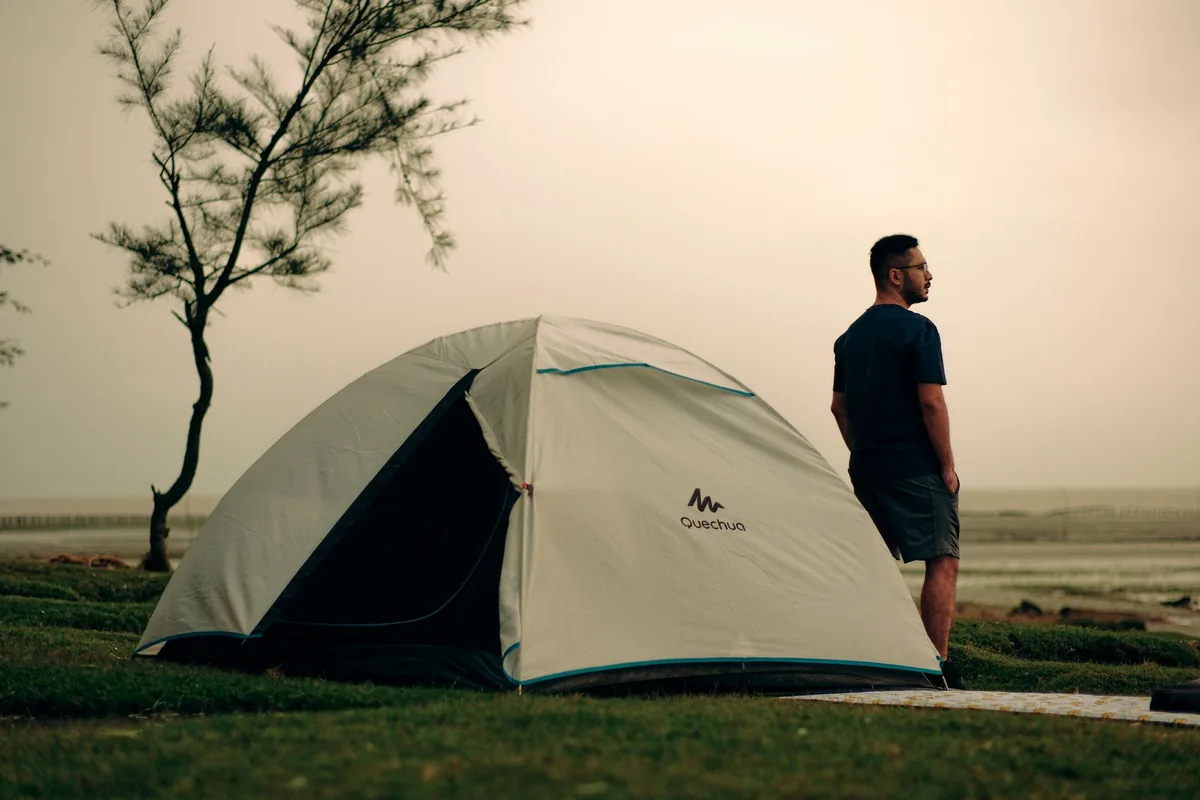
Most “beach” campgrounds sit on bluffs, dunes or just behind the beach. Two put you directly on the sand: Thornhill Broome at Point Mugu State Park, which requires a reservation, and Emma Wood State Beach in Ventura, which is for self-contained vehicles only. Only ordinary public beaches are off limits.
A bluff site still gives you sea air and a short walk down to the water. It also gives you a bluff’s wind, and hot showers if the park has them.
What a beach campsite costs
State park campgrounds charge a nightly site fee, and reservations booked through ReserveCalifornia also carry a non-refundable processing fee. County, federal and private campgrounds, including Doran Regional Park, Kirk Creek, Kirby Cove and Mattole, use their own booking systems and fees, so check each park’s page. The checkout screen shows the total before you pay.
At most state parks, walking or biking in is free, and day-use is charged per vehicle (nine people or fewer). Historic parks and parks with museums may charge per person, so check the park page.
Weekday and off-peak nights are generally easier to book. Hike-in sites are the other way to get a spot when drive-in sites are gone: Crystal Cove’s backcountry has 32 hike-in sites that start at a 3-mile minimum hike, which is a lot of walking with a tent and your water.
How to book a California beach campsite
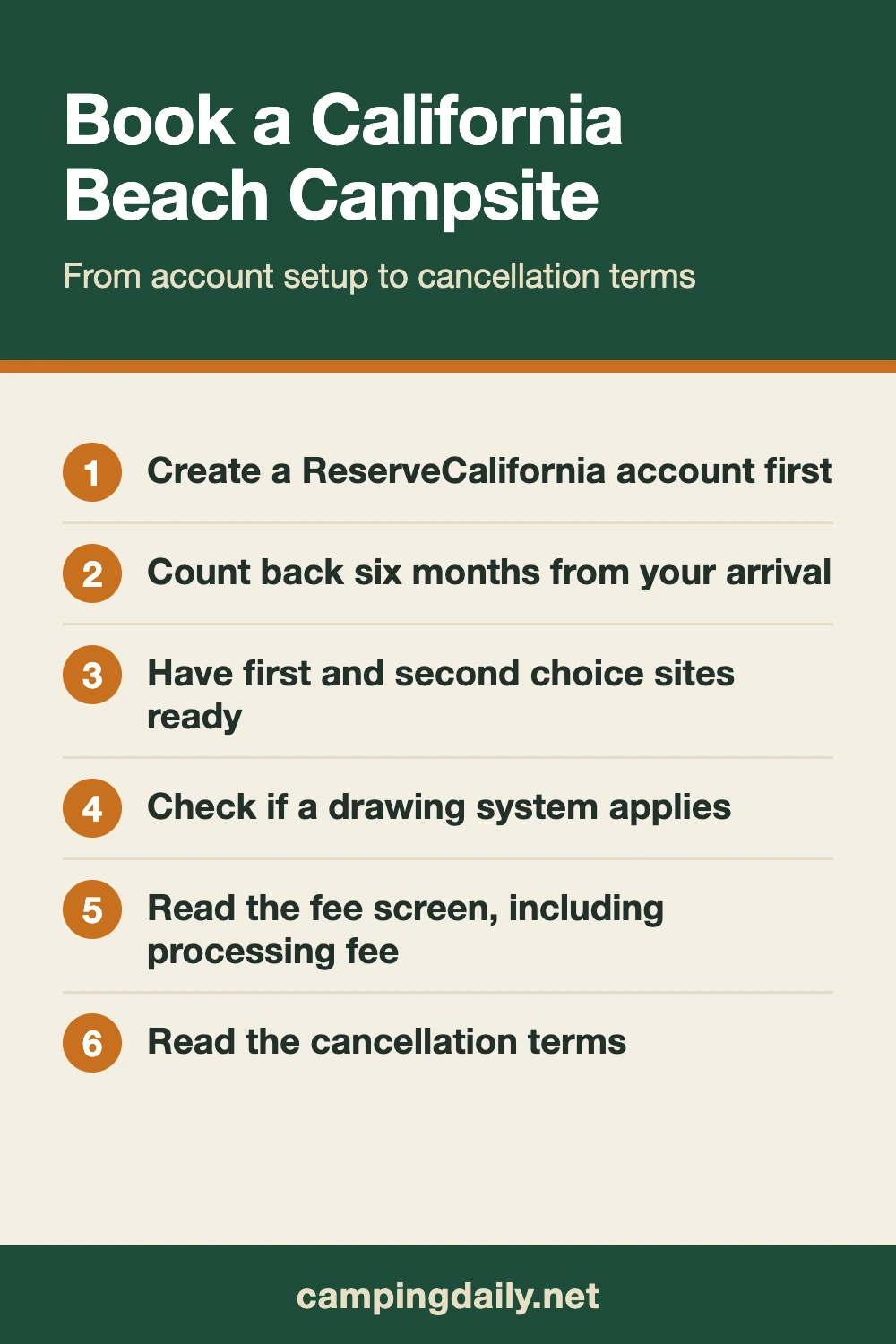
- Create a ReserveCalifornia account first. You need one to book, and having it ready saves minutes when a date opens. Reservations can also be made by phone at 1-800-444-7275, 8am to 6pm Pacific.
- Count back six months from your first night. State park camping opens up to six months ahead. Campgrounds outside the state system may release dates in one-month blocks and can reach further out, so read the booking page for that park.
- Have a first and second choice ready. Write down two sites and two date ranges before the window opens, because popular parks go quickly.
- Check for a drawing. High-demand campgrounds and cabins sometimes use a drawing instead of first-come booking. If your target park lists one, enter it rather than waiting for a live release.
- Read the fee screen before paying. The site fee is only part of the cost. The processing fee is non-refundable, and a second vehicle or day-use charge may apply on arrival.
- Read the cancellation terms. State park reservation policy changed on July 1, 2026, including cancellation terms for camping and lodging. Those terms decide what you lose if plans fall through.
Beach campgrounds by region
The table lists the campgrounds with firm site counts. Notes on each region follow.
| Campground | Sites | Worth knowing |
|---|---|---|
| Crystal Cove, Moro | About 27 hookup and 30 tent | Bluff setting, token-operated hot showers |
| Two Harbors, Catalina | 42 sites plus 13 canvas tent structures | Boat access only |
| Refugio State Beach | 66 dry sites | Table and fire pit at each, camp store |
| Kirk Creek, Big Sur | 33 tent and RV sites, plus 5 hike-in | No hookups, no water |
| Doran Regional Park | 120 | No hookups, coin-operated showers |
| MacKerricher | 140 | Food lockers and fire rings |
| Jug Handle Creek | 11 | No wifi, self-check-in |
| Mattole | 22 tent and trailer sites | Pit toilets, no potable water |
Southern California
San Elijo State Beach, in Cardiff-by-the-Sea, fills fast, so book it the day your six-month window opens. San Onofre State Beach goes early too. San Onofre’s park page lists which of its campgrounds are open right now. Doheny State Beach in Dana Point has an RV dump station but no hookups.
Crystal Cove State Park, in the Laguna Beach area, has the most detail worth knowing. Moro Campground sits on a bluff with ocean views and offers about 27 hookup sites and 30 tent sites (check the park page for the current count). RV limits are 38 feet for hookup sites and 25 feet for non-hookup tent sites, and RVs are measured on entry, so a guess that runs long can cost you the site after a long drive. Hot showers at Moro are token-operated.
The backcountry is a different trip. You carry all supplies in and out, and you pick up your permit at the ranger kiosk. Rattlesnakes and coyotes are both present out there, so look before you put a hand or foot on brush or rocks, and keep a headlamp within reach after dark.
Two Harbors is on Catalina Island, so you get there by ferry or boat from the mainland. Boats sail from San Pedro, Long Beach, Dana Point and Newport Beach, and the crossing runs about an hour. Camping there means 42 sites, 13 canvas tent structures and group areas. Book one of the structures and you can leave your tent at home.
Leo Carrillo State Park in Malibu has no water or sewer hookups. Thornhill Broome at Point Mugu is basic: portable toilets and picnic tables, with no drinking water on site.
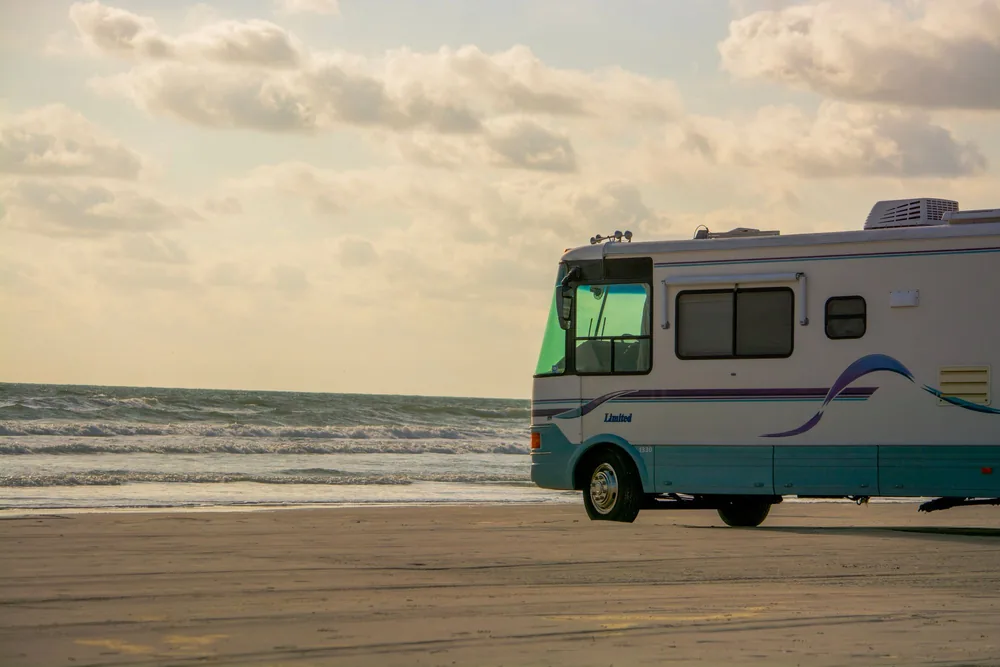
Emma Wood State Beach is primitive. There are no restrooms, water or electricity, tents aren’t allowed, and the campground can close at very high tides. Dockweiler RV Park in Los Angeles is RV only, also no tents.
At Pismo State Beach, one of the two campgrounds floods in heavy rain. In winter, read the park’s alerts in the days before you leave, because a storm week can turn that site into standing water.
Central Coast and Big Sur
Refugio State Beach, roughly 20 minutes north of Santa Barbara, has 66 dry sites with no RV hookups. Each has a picnic table and fire pit, there’s a camp store, and beach wheelchairs are available.
In Big Sur, Kirk Creek has 33 tent and RV sites with no hookups and no water, plus five hike-in sites. Your camping permit also gets you access to Sand Dollar Beach and Pfeiffer Beach. Plaskett Creek, nearby, has flush toilets and sinks but no showers. If you’re stringing several of these stops together, the road trip planning guide covers routes and driving days.
Morro Bay State Park sites are tight, with little foliage between them, so earplugs can help.
San Francisco Bay Area and Marin
Half Moon Bay State Beach has its campsites strung along the bluff, with the sand a short walk below and bathhouses close by. The sites are packed close together.
Kirby Cove in the Marin Headlands is tent only. There is no car camping and no RVs, reservations are required, and the few sites go quickly.
Sonoma and Mendocino coast
Doran Regional Park at Bodega Bay has 120 sites, none with hookups, and coin-operated showers. The beach is exposed to wind, which matters when you’re staking a tent. Bodega Dunes in Sonoma Coast State Park is the alternative if you want a dump station, flush toilets and hot showers.
Wright’s Beach is not suitable for swimming because of strong rip currents and heavy surf, so plan on walking and watching the water instead.
MacKerricher State Park near Fort Bragg has 140 sites with food storage lockers and fire rings. More than 90 bird species have been recorded there, harbor seals are common, and gray whale sightings are possible.
Jug Handle Creek is small, with 11 sites, no wifi and self-check-in. The weather can change suddenly, and the host may ban fires.
Timber Cove in Jenner is listed on Hipcamp. Expect a steep beach road, coin-operated showers, firewood sold on site and no garbage service, so you pack out your own trash. Check the listing for the nightly rate before you commit.
Far North Coast
Gold Bluffs Beach in Humboldt is windy and secluded. The RV limit is 24 feet, no trailers are allowed, and the access road is narrow dirt. Look at the current road report before you drive in.
Mattole Campground has 22 tent and trailer sites, pit toilets and no potable water. The road is rough, and nights are cold and windy.
Shelter Cove RV Campground has full hookups and an on-site deli.
Dog rules at California beach campgrounds
The rule that surprises people is the split one. At San Elijo, leashed dogs are fine in the campground but not on the beach, so the beach walk happens without the dog. Crystal Cove allows leashed dogs only on its 2.5-mile paved bluff trail.
Leo Carrillo has a section of beach open to dogs, and the park’s dog page shows its current boundaries. Jug Handle Creek bans pets entirely. A private-host site such as Timber Cove sets its own limits, which are written in the listing.
Fires, firewood and food storage
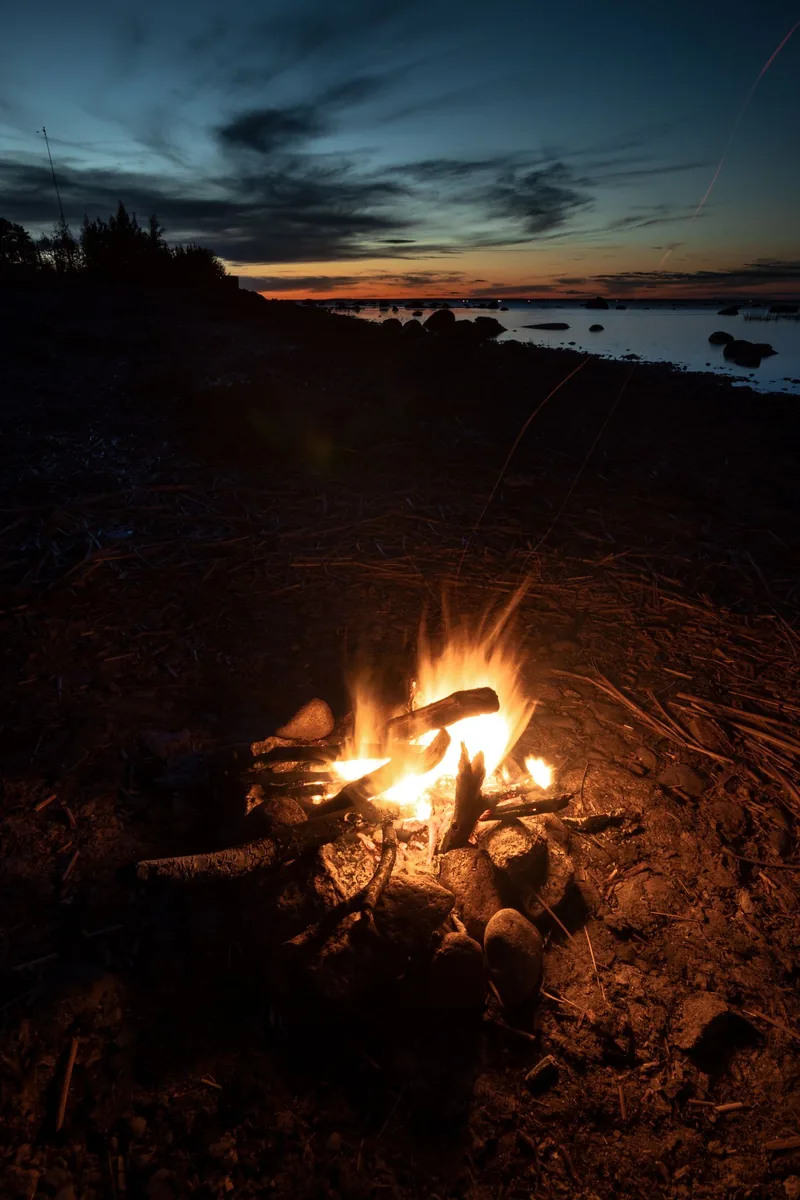
Fire rings come with many state park sites, including Refugio and MacKerricher. Hosts and private sites can ban fires, and wind, drought or local orders can change the answer overnight, so ask at check-in. Keep a coastal fire small in wind. Before you leave or go to bed, soak it, stir the ashes and keep going until the ring is cold to the touch.
Cook behind a windscreen or in the lee of a vehicle, and never run a stove, lantern or heater inside a tent, where carbon monoxide builds up.
Raccoons and coyotes go after unattended food, which is why MacKerricher provides lockers. Use them where they exist. Where they don’t, keep food and trash out of the tent, and shut the cooler, since raccoons can work simple latches.
Safety: tides, surf and wind
Find the high-tide line before you unpack. It’s the band of seaweed and debris the water left on the sand, and a tent pitched seaward of it is a classic first-timer mistake. At a sand site like Thornhill Broome, set up well above that line. Check the tide table for your dates as well, since Emma Wood’s campground can close at very high tides.
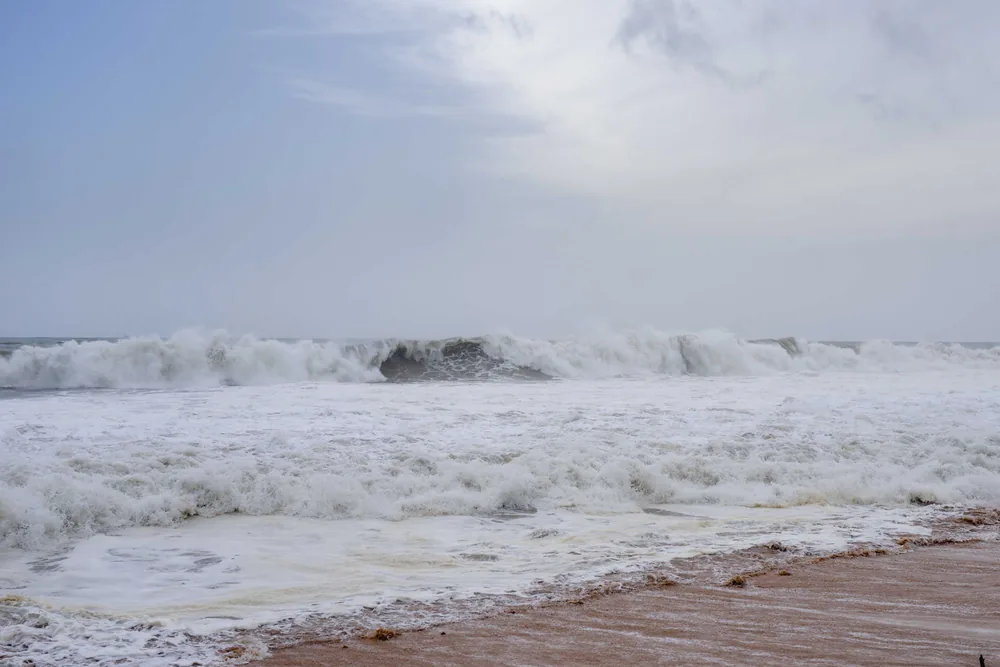
Surf is the other hazard. Stay out of the water where posted, and don’t turn your back on the waves on a rocky or steep shore. If a rip current pulls you out, swim parallel to the shore until it releases you, then angle back in. Crystal Cove’s park site runs a Safe Beach Day QR dashboard that shows lifeguard locations, swim risk and stingray activity.
Wind and fog are the nightly problem. Pitch with the door facing away from the wind, and expect the tent to be damp by morning even when it never rained.
What to pack for wind, fog and cold
Start with paper. Cell service is weak at many coastal sites, so keep your reservation confirmation printed or saved offline, plus a tide table for your dates.
Water is what people underpack. Kirk Creek has none, Mattole has no potable supply, and Thornhill Broome has only portable toilets and picnic tables. Count on a gallon or more per person per day and fill up before you leave pavement.
Warmth comes next. Fog and wind are common north of Santa Cruz, and Mattole is cold and windy at night. Bring a sleeping bag rated colder than the forecast, a warm hat, a waterproof outer layer and a headlamp. A towel for wiping condensation off the rainfly is worth the space.
Small items matter too: coins for Doran’s showers, tokens for Moro’s, a stove that works in wind, and firewood if the site doesn’t sell it.
Pitching in wind and loose sand
- Walk the site first and find which way the wind blows. Set the tent so the door faces away from it.
- Stake the corners before the poles go in, so a gust can’t carry the tent off.
- Drive stakes in at roughly 45 degrees, tilted away from the tent.
- In loose sand, short stakes pull out. Use long or sand-specific stakes, or tie a stuff sack filled with sand to the guy line and bury it deep.
- Guy out every line, and hang a tarp upwind as a windbreak if the site allows it.
Frequently asked questions
What beaches in California can you camp on?
Thornhill Broome at Point Mugu and Emma Wood in Ventura put you directly on the sand. Doheny, San Elijo, San Onofre, Leo Carrillo, Refugio, Pismo, Half Moon Bay, Doran, MacKerricher, Gold Bluffs Beach, Kirk Creek and Kirby Cove are designated campgrounds on bluffs, dunes or just behind the beach. Each has its own booking page.
Is it illegal to sleep on the beach in California?
Outside a campground, yes in practice. Public beaches are day-use, and sleeping overnight on one can bring a citation or an order to leave. Sleeping in a parked car is restricted in some coastal areas as well. Each town sets its own ordinance, so read the local one before planning a roadside night.
Can you camp on the beach in California for free?
Not at the campgrounds named here. State park campgrounds charge a nightly site fee, and ReserveCalifornia bookings add a non-refundable processing fee. County, federal and private campgrounds set their own fees. Walking or biking in for the day is free at most state parks, but that isn’t overnight camping. Hike-in sites are the other option when drive-in sites are full.
Do you need a reservation for beach camping in California?
At most of the campgrounds listed, yes. Thornhill Broome and Kirby Cove both require reservations, and San Elijo and San Onofre fill far in advance. Book before you drive rather than counting on a walk-up opening.
Where can you stay if the campground is full?
Look in the nearest town. Cardiff-by-the-Sea is next to San Elijo, Laguna Beach is near Crystal Cove, and Fort Bragg is close to MacKerricher. Bodega Bay sits by Doran Regional Park, and Big Sur puts you near Kirk Creek and Plaskett Creek. Weekday dates are generally easier to book.
Check the road report before driving to Gold Bluffs Beach or Mattole.