
A campfire pie iron is a pair of hinged cast iron or aluminum halves on long handles. Butter two slices of bread, add a filling, clamp the halves shut, trim the squeezed-out crust, and hold the iron over coals for roughly 3 to 5 minutes, depending on coal heat. The tool is also sold as a mountain pie maker, hobo pie maker or campfire sandwich iron.
For the rest of the meal plan, the camp out recipes hub has more. This page stays with the pie iron: how it works, which shape to buy, how to keep dinner from burning, and 18 recipes grouped by meal.
What a camping pie iron is and how it works
The two halves close like a clamshell, and the handles lock them shut. That presses the bread edges together and seals the filling inside, while heat travels through the metal from the coals below. Rome Industries, a long-established maker, says its original design dates to 1964.
Most Rome irons have long rods with wood handles fixed to the iron. A few short-handled models unscrew, which makes them easier to pack. Check whether yours detaches before you plan to pack it flat or put it in an oven.
Round, square, double or jaffle: which shape to buy
Round and square irons make a standard sandwich or pocket. A double cooks two at once, which helps once you’re feeding more than two people. Jaffle irons seal the edges tightly and cope better with runny fillings. Waffle irons, burger grillers and bread bakers also exist, but each does one job.
Rome lists these irons at these prices (as of October 2026; confirm on romeindustries.com):
| Type | Price |
|---|---|
| Round or square | $30 |
| Double round or double | $40 |
| XL square | $40 |
| Round or square jaffle | $28 |
| Old-fashioned waffle | $39 |
| Chuckwagon waffle | $48 |
Amazon lists about 166 results for “pie iron,” from roughly $19 to $86 as of October 2026, and those prices move around. One aluminum double was listed near $19, while a cast iron single from another brand sat near $27. Cast iron is heavier and holds heat longer, which helps browning but tires a child’s arm. Aluminum weighs less and tends to cost less, so it suits younger cooks.
A small dough crimper, which sells for well under the price of an iron, is a different tool. It seals pastry edges by hand and does no cooking.
Before the first fire: seasoning and cleaning
A thin coat of vegetable oil helps even a pre-seasoned iron. One method bakes the oiled iron at 450°F for about an hour, with the iron taken off its handle. Wood handles can scorch at that heat, so if yours are fixed, skip the oven and let buttered sandwiches build the seasoning over time.
Cleaning is quick. Rinse with warm water, scrub stuck bits with coarse salt, and dry right away, because water left on cast iron rusts it. Wipe a light film of oil over the surface and store the iron somewhere dry.
How to cook with a pie iron over a campfire
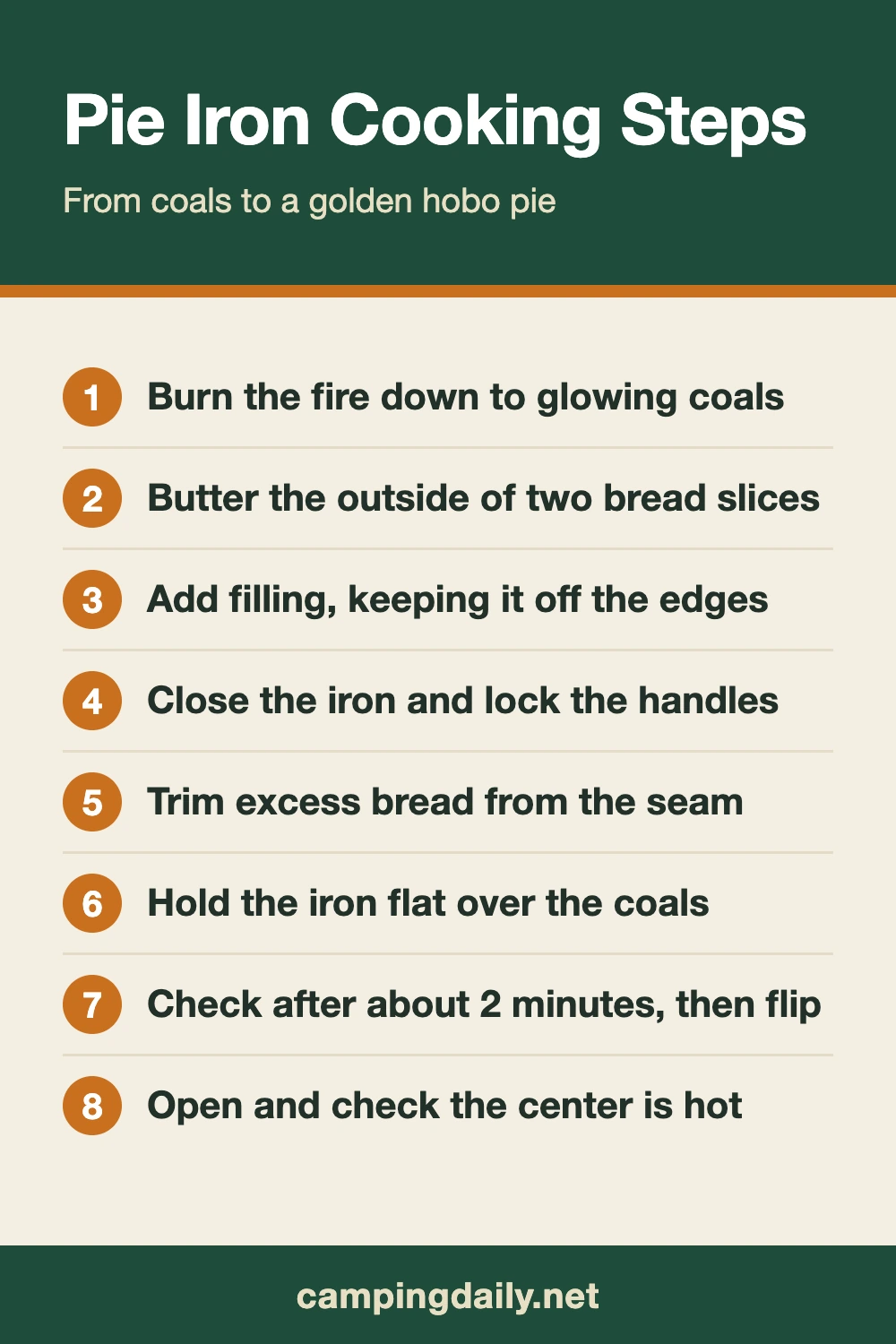
- Build the fire early and burn it down to a bed of glowing coals. Open flame scorches the bread before the middle heats.
- Butter the outside faces of two bread slices, or grease the iron.
- Set one slice butter-side down in the iron, add filling, and top with the second slice butter-side up.
- Close the iron, lock the handles, and trim any bread squeezing out of the edges. Trimmed crust burns first.
- Hold the iron flat over the coals. Tilting it puts one edge nearer the heat and burns that side.
- Check after about 2 minutes, flip, and check again. Older, grayer coals cook slower than fresh ones.
- Open it. Golden brown with the filling hot all the way through means done.
Don’t prop a heavy iron on a loose rock or walk away from it. A flat, stable stand or the edge of a fire ring is safer, and the metal and handles stay hot for several minutes after you pull them off the coals. Kids can hold a short, light iron only with an adult watching and heat-resistant gloves on.
Classic sandwich fillings
1. Grilled cheese
Two slices of white or sourdough, buttered outside, with a slice or two of cheese between them. This is the one to try first in a new iron, since it’s hard to ruin. Thin slices melt evenly, while thick slabs leave a cold center.
2. Ham and cheese
Add one slice of deli ham to the cheese and fold it to the iron’s shape so it stays inside the seam.
3. Pizza pocket
Cut pizza dough into small squares that fit the iron and grease the metal. Layer sauce, cheese and toppings, then a second dough layer. Go light on the sauce, since extra squeezes out and burns onto the iron.
4. Tuna melt
Drain canned tuna well, pat it dry, then mix with a spoonful of mayonnaise and add cheese. Too much moisture gives you soggy bread.
5. Reuben
Corned beef, sauerkraut and Swiss on rye. Squeeze the sauerkraut dry in a paper towel first. A wet filling can make a pie iron sandwich turn limp.
6. Chili cheese pocket
Thick leftover chili works; soupy chili doesn’t. Use a modest amount, keep it back from the edges so it doesn’t leak, and add shredded cheese on top. It’s a good home for last night’s leftovers.
Breakfast pies
7. Biscuit breakfast sandwich
Canned biscuit dough goes top and bottom, filled with egg, cheese and a precooked sausage patty. Scramble the egg in a skillet first and cook it until fully set, because a raw egg in a sealed iron is hard to judge.
8. French toast pie
Dip two bread slices in beaten egg and milk, let the excess drip off, and fill with sliced banana or a spoonful of peanut butter. Cook it until the egg is fully set. Syrup goes on at the table, not in the iron.
9. Bacon and cheese
Precooked bacon crumbles and shredded cheddar. Raw bacon in the iron leaves grease and undercooked strips, so fry or microwave it at home and carry it in a zip bag.
10. Cinnamon roll pocket
Press a canned cinnamon roll flat to line both halves, add cream cheese or a bit of sliced apple, and close. The sugar in the dough browns fast, so shorten the time between checks.
Dessert pies
11. Cherry pie
Bread or croissant dough with canned cherry pie filling. Use a small amount of filling and keep it back from the seam. Overfill it and the syrup boils out and bakes onto the metal.
12. S’mores pie
Layer chocolate and marshmallow between graham-style bread or cinnamon toast. Marshmallow melts fast and leaks, so use mini marshmallows and keep them away from the edge.
13. Banana and chocolate
Banana slices and chocolate chips on buttered white bread make an easy filling. Watch the heat, since chocolate can scorch.
14. Cream cheese and jam
A thin smear of cream cheese plus a spoonful of preserves, closer to a Danish than a pie. Preserves are sugary and burn easily, so cook this one over cooler coals.
15. Cinnamon sugar toast
Buttered bread cooked plain, with cinnamon sugar added afterward. Sugar put in the iron beforehand sticks to the metal and burns.
Handheld and savory extras
16. Meatball pocket
Small precooked meatballs, flattened slightly, with marinara and mozzarella. Cold meatballs from a cooler take longer to heat through. Keep them in the cooler until use, and cut one open to check it is steaming hot in the center.
17. Leftover chicken pocket
Shredded cooked chicken, cheese and a spoonful of barbecue sauce. Use chicken that has stayed refrigerated or in a cold cooler, and discard anything left out more than 2 hours (1 hour if the air is above 90°F). Heat it until steaming hot all the way through, which means 165°F.
18. Apple pie pocket
Cut puff pastry into two pieces that fit the iron, add a small spoonful of canned apple pie filling, and keep it off the seam. Pastry rounds work better here than bread. A hand crimper can seal the edges first, but the iron does the cooking.
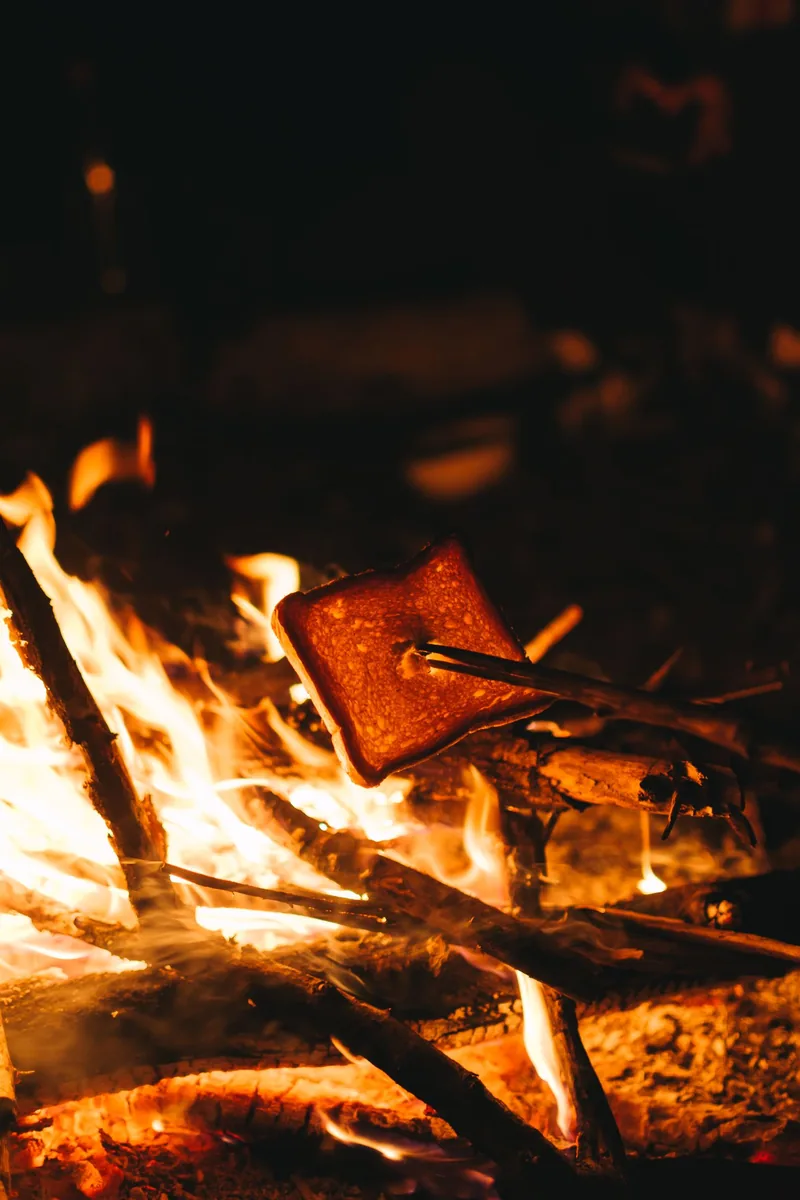
Can you use a pie iron on a camp stove?
Short-handled models unscrew and can sit over a camp stove burner. Follow the maker’s instructions for stove use, turn the iron often, and use it outdoors only. Long wood handles are made for a fire pit and can catch near a flame.
Fire restrictions vary. Some bans also cover camp stoves or limit them to certain types, so check the current rules for your campground or land agency before cooking with any stove.
How to stop leaks, soggy bread and burnt crusts
Leaks start with overfilling and with filling that reaches the edge. Keep it back from the seam, and use less than seems right. For sogginess, drain tuna, squeeze sauerkraut and cook sauces down before they go in.
Burnt crust is a heat problem: coals that are too fresh, an iron held at a tilt, or sugar in the filling. Move to older coals or hold the iron higher.
Grease the iron or butter the outside of the bread every time. For stuck food, loosen it with a short warm-water soak, scrub with salt, then dry fast and oil it lightly.
Frequently asked questions
What is the best campfire pie iron?
For a first iron, a square cast iron single is the simplest pick, and Rome lists one at $30 as of October 2026. Step up to a double if you regularly feed more than two people. Jaffle styles suit wetter fillings. Long handles keep your hands back from a fire pit.
What is a camping pie iron?
A hinged metal clamshell on two long handles. It cooks a sealed sandwich or pie over coals, with the halves pressing the bread edges together to trap the filling. Round, square and double versions exist, and some short-handled models can go over a camp stove.
What can I make in a campfire pie iron?
Grilled cheese, pizza pockets, breakfast sandwiches, French toast and fruit pies all work, and the 18 ideas above cover each. Anything that fits between two layers of bread or dough works. Avoid runny fillings, which leak, and keep raw meat out of the iron. Cook egg-based fillings, including French toast pies, until the egg is fully set.
Are pie irons worth it?
For a family that already builds campfires, yes. A $30 iron turns bread, butter and a can of pie filling into dinner or dessert, and it packs small. Cast iron does need drying and oiling after each use. If you camp mostly where fires are restricted, check the rules first, since stove bans can apply too.
Do I need to season a pre-seasoned pie iron?
Not strictly, but a thin coat of vegetable oil improves it, and cooking buttered sandwiches adds layers over time. Oven seasoning at 450°F for about an hour only works if the handles come off, because wood can scorch at that temperature.
How do I clean a stuck-on pie iron?
Soak it briefly in warm water, scrub with coarse salt, rinse, and dry right away so it doesn’t rust. Rub on a light film of oil before storing. Skip long soaks and the dishwasher, since both invite rust on cast iron.